Frederick III of Denmark
King of Denmark and Norway from 1648 to 1670 · Politicians · Lived 1609 to 1670 · aged 60
Frederick III of Denmark is read about 464 times a day, in 56 languages.
A typical day, 30 days to 15 September 2026
The middle day of the days counted, so one week of news cannot move it. The line under it is the last 360 days, one point a day.
Something wrong?He turned military humiliation into political revolution. After Sweden marched across frozen seas to his doorstep and forced Denmark to its knees, Frederick III dissolved the elective monarchy that had constrained him and installed absolute rule - the first codified absolutism in Western history.
Also in Deutsch
Photos 8
 Frederik III, 1663
 2015 08 13 Frederic III gebaut in Neustadt Holstein IMG 1106 S k
 673 of 'Illustreret Norges historie. (With plates.)' (11307144224)
 Nicolai Abildgaard - Absolute Monarchy Assigned to Frederik III in 1660 - KMS1139e - Statens Museum for Kunst
 Anderas Reinhard - Frederik III
 Arolsen Klebeband 02 183
 Arvehyldningen 1660
 Arvehyldningen 1880 by Heinrich Hansen
Awards
Family
Parents
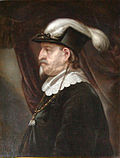

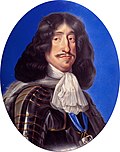 Frederick III of Denmark
Partners

Children


Brothers and sisters
 Leonora Christina Ulfeldt
 Elisabeth Sophia Gyldenløve
 Anne Cathrine Christiansdatter
 Elisabeth Augusta Lindenov
 Hedevig Ulfeldt
- Dorothea Elisabeth Christiansdatter
 Sophie Elisabeth Pentz
 Christiane Sehested
 Valdemar Christian of Schleswig-Holstein
 Ulrik of Denmark
 Christian, Prince-Elect of Denmark
 Ulrik Christian Gyldenløve
Is this everyone?
Only relatives with a profile here are drawn, so a family can be larger than this. A line here can also be wrong.
Correct this familyAbout this person
Born 18 March 1609, the second son of Christian IV, Frederick was never meant to rule until his older brother died in 1647. He inherited a kingdom exhausted by his father's costly wars and was shut out of the Peace of Westphalia negotiations in 1648, forced to watch Sweden take Bremen and stop paying the Øresund Tolls. To secure his election, he made large concessions to the nobility. Then he fought Sweden twice and lost both times - in 1658, Charles X Gustav marched 5,000 men across the frozen Belts to Zealand and cornered an unprepared Frederick into signing the Treaty of Roskilde. That defeat became his opening: in 1660 he disbanded the elective monarchy in favor of absolute rule, formalized by law in 1665, a system that endured until 1814 in Norway and 1848 in Denmark. He died 9 February 1670.


Fame.am measures public visibility signals. It does not measure human value, talent, morality, or credibility.