Emil Kraepelin is read about 262 times a day, in 48 languages.
A typical day, 30 days to 8 October 2026
The middle day of the days counted, so one week of news cannot move it. The line under it is the last 81 days, one point a day.
Something wrong?The German psychiatrist who built the framework modern medicine still uses to sort madness into categories. His biological view of mental illness - rooted in genetics and brain chemistry - shaped the 20th century twice: once at its start, again at its end, after Freud's long detour through the mind.
Also in Deutsch
Photos 7


Family

Is this everyone?
Only relatives with a profile here are drawn, so a family can be larger than this. A line here can also be wrong.
Correct this familyAbout this person
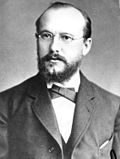
Emil Wilhelm Georg Magnus Kraepelin was born 15 February 1856 in Germany and trained as a psychiatrist at a time when the field had no shared language for disease. He argued that psychiatric disorders arose from biological and genetic malfunction, not moral weakness or bad spirits, and set about classifying them with what he called rigorous clinical standards - though he also relied on observations from officials with no psychiatric training. His textbooks compiled typical statements and behaviors into diagnostic mosaics rather than detailed individual case histories, a method that made him both a scientific manager and a political operator running large-scale epidemiological research. His biological paradigm dominated psychiatry at the start of the 20th century, fell back during Freud's psychodynamic reign, then returned in force by century's end as the foundation for psychopharmacology and psychiatric genetics. He also developed racist psychiatric theories. Kraepelin died 7 October 1926.





Fame.am measures public visibility signals. It does not measure human value, talent, morality, or credibility.