Constantine VII
Byzantine emperor · Writers · Lived 905 to 959 · aged 54
Constantine VII is read about 448 times a day, in 60 languages.
A typical day, 30 days to 15 October 2026
The middle day of the days counted, so one week of news cannot move it. The line under it is the last 390 days, one point a day.
Something wrong?A Byzantine emperor who spent half his reign sidelined by co-rulers, then turned confinement into scholarship - compiling manuals on statecraft, ceremony, and agriculture that became the primary windows into how his empire actually worked.
Also in Deutsch
Photos 8
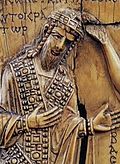
 Constantine VII Porphyrogenitus
 114 - Constantine VII, 1st portrait (Mutinensis - color)
 119 - Constantine VII, 2nd portrait (Mutinensis - color)
 Acclamation during Louperkalia feast (15 February)
 Book of Imperial Ceremonies at Constantinople
 Bulcsú vezért megkeresztelik Bizáncban. Codex Skylitzes 134r.
 Constantine VII (Roman emperor), deathbed
 Constantine VII (Zonaras portrait)
In their own words 1
 ,
Over a long time many things can disappear which, while achieved in that time, are also consumed by it.
Family
Parents

 Constantine VII
Partners

Children

Is this everyone?
Only relatives with a profile here are drawn, so a family can be larger than this. A line here can also be wrong.
Correct this familyAbout this person
Born 17 May 905 in the Purple Chamber to Leo VI and his fourth wife Zoe Karbonopsina, Constantine VII wore the title porphyrogenitus - "born in the purple" - as proof of legitimacy his whole life. He became emperor at seven in 913, but his mother ruled as regent until 919, and then Romanos Lekapenos, whose daughter Helena he married, held power alongside his own sons from 920 to 945. Constantine spent twenty-five years as a ceremonial figure. When he finally ruled alone after 945, his legacy came not from conquest but from the works produced under his name: the agronomic Geoponika, the administrative manual De Administrando Imperio, the court ceremonial guide De Ceremoniis, the provincial survey De Thematibus, and possibly the biography Vita Basilii. He died 9 November 959, having reigned forty-six years but governed for fourteen.


Fame.am measures public visibility signals. It does not measure human value, talent, morality, or credibility.