Charles VI of France
King of France from 1380 to 1422 (1368-1422) · France · Historical Figures · Died at 53
Charles VI of France is read about 2,137 times a day, in 74 languages.
A typical day, 30 days to 15 October 2026
The middle day of the days counted, so one week of news cannot move it. The line under it is the last 390 days, one point a day.
Something wrong?A king who believed he was made of glass and might shatter. Charles VI's recurring psychotic episodes - including attacking his own knights in a forest - turned the French throne into a prize fought over by relatives while England closed in.
Also in Deutsch
Photos 8
 Charles VI de France - Dialogues de Pierre Salmon - Bib de Genève MsFr165f4
 A Chronicle of England - Page 375 - Charles and Henry Welcomed by the Clergy at Paris
 Acte qui déclare le don par Charles VI à son frère Louis 1 - Archives Nationales - K532-B n°17
 Baie 210 Charles VI (Notre-Dame, Évreux)
 Baie 210 détail Charles VI (Notre-Dame, Évreux)
 BnF Français 5873 fDv. Livre fait par GILLES LE BOUVIER
 Buretta di carlo VI in bronzo dorato, 1390 ca.
 Carlo VI di Francia - genovino 1396-1409
Awards
Family
Parents


 Charles VI of France
Partners

Children
 Isabella of Valois
 Joan of France, Duchess of Brittany
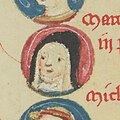 Marie, Prioress of Poissy
 Michelle of Valois
 Louis, Dauphin of France, Duke of Guyenne
 John, Dauphin of France, Duke of Touraine
 Catherine of Valois
 Charles VII of France
 Charles de France
 Charles, Dauphin of France
- Marguerite, bâtarde de France
- Philippe de Valois
Is this everyone?
Only relatives with a profile here are drawn, so a family can be larger than this. A line here can also be wrong.
Correct this familyAbout this person
Charles VI became king at eleven in 1380, inheriting a France largely reclaimed from English control. He threw off his uncles' regency at twenty, but in 1392, leading troops toward Brittany, he suffered his first episode of delirium and turned on his own men in the forest of Le Mans. After nearly burning to death at the Bal des Ardents in January 1393, he was placed back under regency, cycling between lucidity and madness for the rest of his life. His uncles, his wife Isabeau, and his brother Louis of Orléans jockeyed for control; the feud between Orléans and Burgundy ignited a civil war that tore France apart. In 1415 his army was crushed at Agincourt. The Treaty of Troyes followed: Charles disinherited his own son in favor of Henry V of England, who married Charles's daughter and was named regent and heir. Henry died two months before Charles in 1422, and though the infant Henry VI inherited the throne by law, Charles's son was crowned at Reims in 1429 - the beginning of the Valois fight that would end the Hundred Years' War.


Fame.am measures public visibility signals. It does not measure human value, talent, morality, or credibility.