Alfred Adler is read about 1,340 times a day, in 77 languages.
A typical day, 30 days to 15 October 2026
The middle day of the days counted, so one week of news cannot move it. The line under it is the last 390 days, one point a day.
Something wrong?He broke with Freud over a different diagnosis: that what drives us isn't buried sex or death but the ache to belong, to matter, to offset the cold fact of inferiority we all carry. Birth order, family position, the push to contribute - Adler saw personality as social architecture, not psychic theatre.
Also in Deutsch
Photos 8


.jpg?width=1200)

In their own words 4
 ,
, Meanings are not determined by situations, but we determine ourselves by the meanings we give to situations.
To be human means to feel inferior.
It is always easier to fight for one's principles than to live up to them.
Family
Parents
Alfred AdlerPartners
Children

Is this everyone?
Only relatives with a profile here are drawn, so a family can be larger than this. A line here can also be wrong.
Correct this familyAbout this person
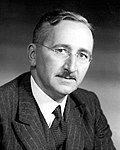
Alfred Adler was born February 7, 1870, in Austria and trained as a medical doctor before turning to psychotherapy. He founded the school of individual psychology, breaking from Freud and their shared circle by centering feelings of belonging, family relationships, and birth order as the engines of personality. He coined "inferiority complex" to describe the isolating weight he believed shaped development, and argued that contributing to others - what he called social interest, or Gemeinschaftsgefühl - was how a person feels worth and place in society. Adler treated the human being as an individual whole and was the first to pull psychiatry out of the clinic and into the community, emphasizing social re-adjustment over inner excavation. He died May 28, 1937. A 2002 survey ranked him the 67th most eminent psychologist of the 20th century.




Fame.am measures public visibility signals. It does not measure human value, talent, morality, or credibility.