Albert Szent-Györgyi
Hungarian biochemist, Nobel Prize laureate in Physiology or Medicine in 1937 (1896-1986) · United States · Scientists · Lived 1893 to 1986 · aged 93
Albert Szent-Györgyi is read about 148 times a day, in 70 languages.
A typical day, 30 days to 23 October 2026
The middle day of the days counted, so one week of news cannot move it. The line under it is the last 398 days, one point a day.
Something wrong?He pinned down vitamin C when scurvy was still killing sailors, then mapped the citric acid cycle - the chemical loop that turns food into the energy keeping every cell alive.
A life in dates
Also in Deutsch
Photos 8
 Albert Szent-Györgyi
 25. Jubiläumstagung 1975 Medizin- In der Sitzreihe von links nach rechts- André F. Cournand, ?, Konrad Lorenz, Albert Szent György, Lars Onsager - LABW - Staatsarchiv Freiburg W 134 Nr. 103667b
 Albert Szent-Györgyi and Rózsa Ignácz, Graphisoft Park U4, 2016 Aquincum
 Albert Szent-Györgyi, Eger
 Delmagyar-szovjetut
 Gedenktafel, Kossuthstrasse 19-23 A, 2025 Dunaföldvár
 Kilenc Nobel-díjas kutató
 Nobel Szent-Gyorgyi
In their own words 10
 ,
Discovery consists of looking at the same thing as everyone else and thinking something different.
I am not religious, but I am a pious man... A religious man has a definite religion.
If any student comes to me and says he wants to be useful to mankind and go into research to alleviate human suffering, I advise him to go into charity instead.
Awards
Family
Albert Szent-GyörgyiPartners
Is this everyone?
Only relatives with a profile here are drawn, so a family can be larger than this. A line here can also be wrong.
Correct this familyAbout this person
Albert Imre Szent-Györgyi de Nagyrápolt was born in Hungary on September 16, 1893. His work in biochemistry led him to isolate vitamin C for the first time, a breakthrough that explained a disease that had puzzled medicine for centuries. He went on to discover many of the components and reactions of the citric acid cycle, the fundamental process by which cells generate energy. He also uncovered the molecular basis of muscle contraction. In 1937 he won the Nobel Prize in Physiology or Medicine. He died on October 22, 1986.
In common with Albert
 Henri B. KaganBoth received August Wilhelm von Hofmann Medal
 Henri MoissanBoth received August Wilhelm von Hofmann Medal
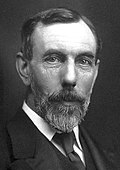 William RamsayBoth received August Wilhelm von Hofmann Medal
 Emilio SegrèBoth received August Wilhelm von Hofmann Medal
 Lawrence BraggBoth received August Wilhelm von Hofmann Medal
 Omar M. YaghiBoth received August Wilhelm von Hofmann Medal
Fame.am measures public visibility signals. It does not measure human value, talent, morality, or credibility.