What kind of moment: History, Research publication
Newton's Laws published
- When
- 1687
- Where
- United Kingdom
- Number of laws of motion
- 3
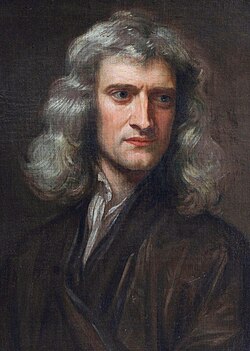
Isaac Newton published Philosophiæ Naturalis Principia Mathematica (Mathematical Principles of Natural Philosophy) in London on July 5, 1687, laying out three laws of motion that became the foundation of classical mechanics. The work explained how objects move and interact through force, replacing centuries of intuition-based physics with mathematical precision. It remained the dominant framework for understanding the physical world for more than two centuries.
Newton's three laws - inertia, force-acceleration, and action-reaction - unified terrestrial and celestial mechanics under a single mathematical framework. The Principia didn't just explain existing observations; it made physics predictive and quantifiable, enabling everything from ballistics to orbital mechanics.
In numbers
- Number of laws of motion
- 3
How it unfolded
Newton's Year of Wonders begins
Cambridge University closes due to plague; Newton retreats to Woolsthorpe and develops early versions of his theories of motion and gravity.
Hooke rekindles Newton's interest in planetary motion
Robert Hooke's letter prompts Newton to reconsider the inverse-square law and celestial mechanics, accelerating work toward the Principia.
Newton presents draft to Royal Society
Newton submits the manuscript of Principia to the Royal Society; Edmond Halley offers to fund publication.
Distribution begins across Europe
Copies of Principia reach scientists and natural philosophers across England, France, and the Dutch Republic within weeks.
Second edition published
Newton releases a revised edition with corrections and additional material, further cementing the work's authority.
Third and final edition in Newton's lifetime
Newton's last revision is published, representing the most complete version of his natural philosophy.
- What followed
1687: Foundation of Classical Mechanics
- What followed
1760: Industrial Revolution Engineering
- What followed
1750: Celestial Mechanics and Lunar Theory