
What kind of moment: History, War
Mongol Conquest of China begins
- When
- 1205 to 1279
- Where
- China proper, Mongolian Plateau, Tarim Basin
- Outcome
- Mongol victory
In 1205, Genghis Khan unified the Mongol tribes and launched a systematic conquest of China's fractured dynasties that would consume 74 years. By 1279, Mongol forces under Kublai Khan had defeated the Jin dynasty, Western Xia, Dali, and finally the Southern Song, establishing the Yuan dynasty and reshaping the political map of Asia.
The conquest centralized Chinese territory under foreign rule for the first time in centuries and created the largest contiguous land empire in history. It disrupted centuries of dynastic patterns, accelerated Eurasian trade networks, and established precedent for non-Han rule that would resonate through subsequent centuries.
In numbers
- Yuan dynasty establishment
- 1271 (formally declared by Kublai Khan)
- Territory encompassed
- Approximately 5.4 million square miles at peak
Where it sits in their lives
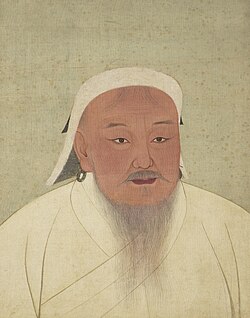 Genghis Khan1162 to 122743
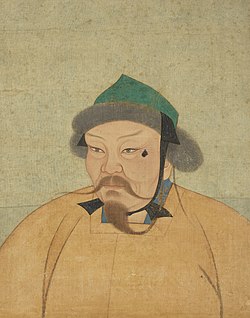 Ögedei Khan1186 to 124119
- Emperor Xiangzong of Western Xia1170 to 121135
- Emperor Huanzong of Western Xia1177 to 120628
- Their age at this moment
How it unfolded
Genghis Khan unifies Mongol tribes
Temüjin (later called Genghis Khan) consolidates power over fractious Mongol clans at a kurultai assembly, establishing the foundation for imperial expansion.
Mongol conquest of China begins
Early Mongol raids against the Jin dynasty and other Chinese states commence, setting the stage for decades of warfare.
Fall of Western Xia
Genghis Khan's forces destroy the Western Xia kingdom, eliminating a major regional power and securing Mongol western flank before moving against the Jin.
Jin dynasty collapse
The Jin dynasty falls to combined Mongol and Southern Song forces after decades of Mongol military pressure; Jin ruler Aizong dies during the siege of Caizhou.
Kublai Khan proclaimed Great Khan
Kublai Khan, grandson of Genghis Khan, assumes leadership and continues the systematic conquest of southern Chinese territories.
Battle of Yamen ends Song resistance
The final decisive naval battle off Yamen eliminates Southern Song naval power and the last organized resistance; young Emperor Zhao Bing dies in the defeat, ending Song dynasty rule and completing Mongol unification of China.
- What followed
1234: Jin Dynasty collapse
- What followed
1271: Kublai Khan establishes Yuan Dynasty
- What followed
1279: Southern Song Dynasty falls

Who took part
More about this war
Leaders
Genghis Khan (Pre-1234 northern campaigns, Mongol Empire +4 more), Ögedei Khan, Güyük Khan, Möngke Khan, Kublai Khan, Subutai
Emperor Huanzong of Western Xia (Pre-1234 northern campaigns, Western Xia +3 more), Emperor Xiangzong of Western Xia, Emperor Xianzong of Western Xia, Emperor Mo of Western Xia, Wanyan Yongji, Emperor Xuanzong of Jin
Before and after, with the same people
- Mongol Conquest of China begins

 Khan, Khan, XiaThis moment
- Genghis Khan Proclaimed Supreme RulerKhanSee the moment ›