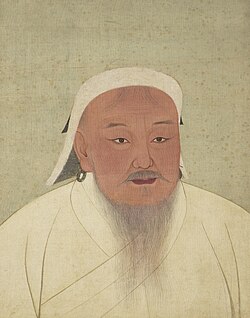
What kind of moment: History, Regime change
Genghis Khan Proclaimed Supreme Ruler
- When
- 1206
In 1206, a Mongol warrior named Temüjin united the fractious tribes of the steppes and took the title Genghis Khan - a proclamation that would reshape the political map of Asia and beyond. Over the next few decades, his armies conquered territory from the Pacific to the Black Sea, creating the largest contiguous land empire in history. The event marked the beginning of a transformation that redrew borders, redirected trade routes, and altered the genetic and cultural makeup of entire continents.
Genghis Khan's coronation united warring Mongol clans under a single military hierarchy and set the stage for the largest land empire ever assembled. His organizational innovations - meritocratic command structures, rapid communication systems, and combined-arms tactics - became templates for military and administrative organization across Asia and Europe.
In numbers
- Number of major Mongol tribes
- Approximately 12-15 prior to unification
- Peak empire territory
- 24 million square kilometers (9.3 million square miles)
- Reign duration as Great Khan
- 1206-1227 (21 years)
His life around it
- Born
- Mongol Conquest of China begins
- Genghis Khan Proclaimed Supreme Ruler44 that year
- Died, aged 65
How it unfolded
Birth of Temüjin
Temüjin born near the Onon River in Mongolia. Early life marked by tribal conflict and personal hardship.
Victory over the Tatars
Temüjin defeats the Tatar tribe in a decisive battle, eliminating a major rival and gaining followers.
Genghis Khan proclaimed Supreme Ruler
Temüjin convenes a kurultai (assembly) at the Onon River and is proclaimed Genghis Khan (Universal Ruler) by the unified Mongol tribes. He establishes the Great Mongol Nation.
First military campaigns
Genghis Khan begins campaigns against neighboring peoples, expanding Mongol territory and recruiting additional forces.
Central Asian campaign begins
Genghis Khan launches invasion of the Khwarazmian Empire, one of the era's most powerful states. The campaign lasts until 1221.
Death of Genghis Khan
Genghis Khan dies, possibly from complications of a fall from a horse or illness. His empire passes to his son Ögedei Khan.
- What followed
1206: Unified Mongol military structure replaces tribal feudalism
- What followed
1209: Mongol conquest of Jin Dynasty begins
- What followed
1219: Expansion into Central Asia and Persia