
What kind of moment: History, War
Hundred Days Offensive
- When
- 8 August to 11 November 1918 (95 days)
- Where
- Amiens, France to Mons, Belgium
- Outcome
- Allied victory
In the summer of 1918, the Allies launched a coordinated series of offensives along the Western Front that broke the stalemate of trench warfare and forced Germany toward surrender. Starting with the Battle of Amiens in August, British, French, and Canadian forces pushed back the German Army across France and Belgium. The offensive sequence effectively ended four years of grinding attrition and set the stage for the armistice in November.
The Hundred Days Offensive proved that sustained, coordinated attacks by multiple Allied armies could overcome German defenses when the enemy was exhausted and running out of reserves. It transformed the war from a question of whether either side could win into a matter of how quickly Germany would collapse - a shift that compressed years of potential bloodshed into months.
In numbers
- Territory recovered
- Approximately 375 square kilometers of French and Belgian territory
Where it sits in their lives
 Paul von Hindenburg1847 to 193470
 Albert I of Belgium1875 to 193443
 Wilhelm, German Crown Prince1882 to 195136
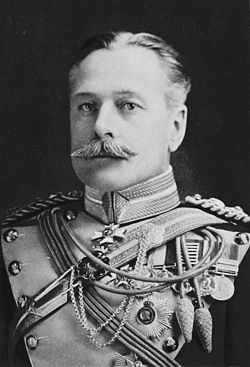 Douglas Haig, 1st Earl Haig1861 to 192857
- Their age at this moment
- Their other moments in history
How it unfolded
Battle of Amiens begins
The opening offensive of the Hundred Days campaign, launched by British Expeditionary Force under Field Marshal Douglas Haig with Canadian and Australian forces. The surprise attack broke through German lines and marked the start of the final Allied push.
German High Command acknowledges defeat
After the failures at Amiens, Ludendorff told the Kaiser that Germany could no longer win the war. The psychological and strategic turning point that set the stage for Germany's collapse.
Breaking of the Hindenburg Line begins
British and French forces commence the assault on Germany's last major defensive position. The breakthrough would take weeks but signaled the end of German defensive capability.
German armistice request transmitted
The German government formally requests armistice terms through Swiss intermediaries, citing the military situation and domestic instability.
Kaiser Wilhelm II abdicates
Following revolution in Berlin and military collapse, Kaiser Wilhelm II flees to the Netherlands. Friedrich Ebert assumes leadership of the new German Republic.
Armistice signed
The Armistice is signed in Ferdinand Foch's railway carriage at Compiègne, ending hostilities at 11:00 AM. The Hundred Days Offensive achieves its objective: the end of World War I.
- What followed
1919: Treaty of Versailles signed
- What followed
1918: End of European imperial order
- What followed
1920: League of Nations established
Who took part


More about this war
Commanders
Ferdinand Foch (French Third Republic, Canada +4 more), Philippe Pétain, Paul Maistre, Émile Fayolle, Édouard de Castelnau, Douglas Haig, 1st Earl Haig
Paul von Hindenburg (German Empire, Austria-Hungary), Erich Ludendorff, Wilhelm Groener, Max von Gallwitz, Rupprecht, Crown Prince of Bavaria, Wilhelm, German Crown Prince
Before and after, with the same people
- Battle of the Somme begins


 Hindenburg, Haig, BavariaSee the moment ›
- Second Battle of the Marne
 BoehnSee the moment ›
- Hundred Days Offensive
 Hindenburg, Belgium, PrinceThis moment
- 1925 German presidential election: Paul von Hindenburg winsHindenburgSee the moment ›
- 1932 German presidential election: Paul von Hindenburg winsHindenburgSee the moment ›