Zoroaster
Founder of Zoroastrianism · Writers · Died 551 BC
He preached cosmic dualism and personal moral choice in ancient Iran, possibly as early as the second millennium BC, and built a religion that ruled an empire for centuries before Islam arrived. Scholars still argue whether Plato and the Abrahamic faiths borrowed his framework of truth against deception.
Zoroaster is read about 3,529 times a day, in 124 languages.
A typical day, 30 days to 9 November 2026
The middle day of the days counted, so one week of news cannot move it. The line under it is the last 400 days, one point a day.
Something wrong?People around Zoroaster
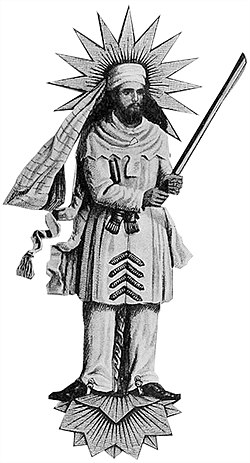




 Zoroaster
Partners
Is this everyone?
Only relatives with a profile here are drawn, so a family can be larger than this. A line here can also be wrong. A marriage is drawn as ended only where its end is recorded, so a spouse drawn here may be a former one.
Correct this familyAlso in Deutsch
Media & music


In their own words 10
, Truth is best (of all that is) good. As desired, what is being desired is truth for him who (represents) the best truth.
Unto Thee, O Lord, the Soul of Creation cried: / "For whom didst Thou create me, and who so fashioned me?
Thus to the Lord doth Asha, the Truth, reply: / "No guide is known who can shelter the world from woe, / None who knows what moves and works Thy lofty plans.
About this person
Zarathushtra Spitama spoke Old Avestan somewhere in the eastern reaches of Greater Iran - possibly Bactra, in what's now Afghanistan - and trained as a priest from childhood. Around age 30, a divine revelation introduced him to Ahura Mazda, the Wise Lord, and a dualism of truth versus deception that would anchor his reform of the ancient Iranian religion. He gained the backing of King Vishtaspa, married three times, fathered six children, and composed the Gathas and the Yasna Haptanghaiti, hymns that became the core of Zoroastrian belief. His philosophy centered on free will and ethical responsibility - aligning with asha through good thoughts, words, and deeds. Zoroastrianism rose to become Greater Iran's dominant faith by the 6th century BC, enjoyed official sanction under the Sassanid Empire, and held until the Arab-Muslim conquest of the 7th century AD began its long decline. Almost nothing about his life survives outside the hymns, and scholars place him anywhere from the 7th century BC to a thousand years earlier, his dates and biography blurred by centuries of legend.