
Yukihiro Matsumoto
✓ Source-basedrisingJapanese computer scientist who created the Ruby programming language
He built Ruby, the programming language designed for programmer happiness rather than machine efficiency - a philosophy that made writing code feel less like instructing a computer and more like expressing an idea.
Also inDeutsch
Photos 3


In their own words 3
Computers are not very smart. They don't understand human language, so we have to tell them what to do in a language that both humans and computers can understand.
Yukihiro Matsumoto "I'm a Mormon, Ruby Author and a World-changer" by ComeUntoChrist.org on 2013-08-12.
Often people, especially computer engineers, focus on the machines. They think, "By doing this, the machine will run faster. By doing this, the machine will run more effectively.
Yukihiro Matsumoto "The Philosophy of Ruby, A Conversation with Yukihiro Matsumoto, Part I" by Bill Venners on 2003-09-29 (Artima
Everyone has an individual background. Someone may come from Python, someone else may come from Perl, and they may be surprised by different aspects of the language.
Yukihiro Matsumoto "The Philosophy of Ruby, A Conversation with Yukihiro Matsumoto, Part I" by Bill Venners on 2003-09-29 (Artima
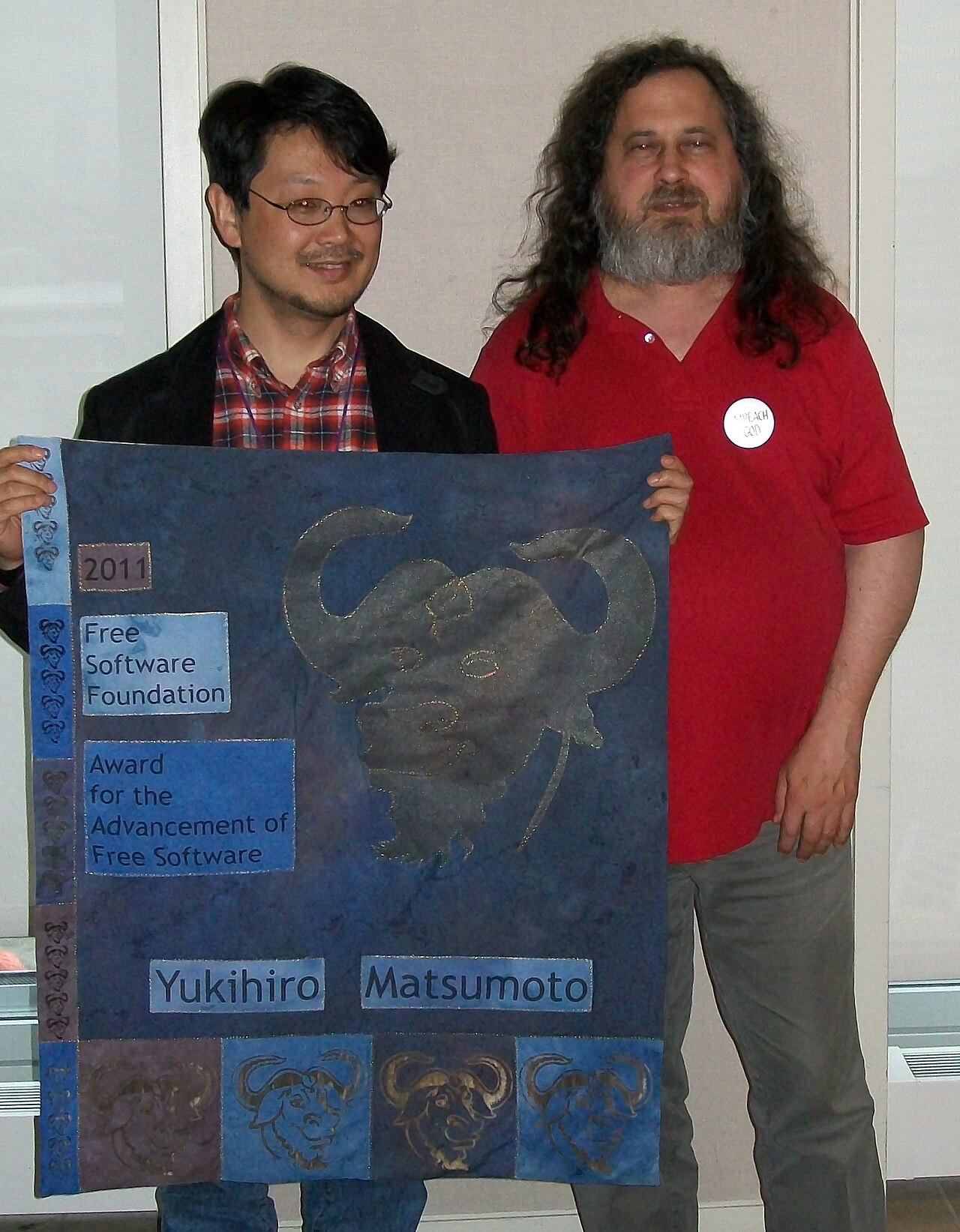
Awards 1
GitHub
@matzConnected to Yukihiro 4


Developers from Japan 2

About this person
Yukihiro Matsumoto was born 14 April 1965 in Japan. He designed the Ruby programming language and wrote its original reference implementation, Matz's Ruby Interpreter (MRI), creating a language that prioritized human readability over computational orthodoxy. By 2011 he had become Chief Architect of Ruby at Heroku, a cloud platform-as-a-service in San Francisco. He also joined the Rakuten Institute of Technology as a fellow, working within the research arm of Rakuten Group, Inc. In June 2014 he took on a technical advisor role at VASILY, Inc., continuing to shape development philosophy across multiple organizations while Ruby itself spread through web frameworks and startups worldwide.
 Japan
JapanFame.am measures public visibility signals. It does not measure human value, talent, morality, or credibility.