Tutankhamun
14th century BCE (18th dynasty) Egyptian pharaoh · Egypt · Models · Lived 1343 BC to 1324 BC · aged 19
Tutankhamun is read about 7,017 times a day, in 113 languages.
A typical day, 30 days to 15 October 2026
The middle day of the days counted, so one week of news cannot move it. The line under it is the last 390 days, one point a day.
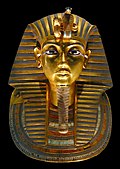
Something wrong?A pharaoh who died at 18 and ruled fewer than ten years, forgotten by his own successors - until 1922, when his nearly intact tomb turned him into the face of ancient Egypt. The gold mask did what the reign couldn't.
Also in Deutsch
Photos 8


Family
Parents
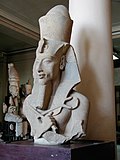

 Tutankhamun
Children

Brothers and sisters




Is this everyone?
Only relatives with a profile here are drawn, so a family can be larger than this. A line here can also be wrong.
Correct this familyAbout this person
Born Tutankhaten around 1342 BC, he became pharaoh at roughly nine years old and immediately began dismantling his predecessor's religious revolution, restoring the old gods and changing his own name to Tutankhamun to reflect it. He moved the court from Amarna back to Memphis, rebuilt the cult of Amun at Thebes, and recorded his restorations on what's now called the Restoration Stela - rare among Egyptian kings, he was worshipped as a deity in his own lifetime. He carried out campaigns in Nubia and the Near East and began a royal tomb in the Valley of the Kings, but died unexpectedly around 1323 BC, likely from malaria and a leg fracture, at about eighteen. Buried in a small adapted tomb, he was succeeded by his vizier Ay, then by his military commander Horemheb, who erased him from the record along with the other Amarna rulers. Howard Carter and Lord Carnarvon found him in 1922: robbed in antiquity but still packed with over 5,000 artifacts, including the undisturbed mummy, and that mask - now the icon that carries his name forward as "King Tut," long past the empire that tried to forget him.


Fame.am measures public visibility signals. It does not measure human value, talent, morality, or credibility.