Thomas Robert Malthus
British political economist (1766-1834) · United Kingdom · Academics · Died at 68
Thomas Robert Malthus is read about 857 times a day, in 88 languages.
A typical day, 30 days to 15 October 2026
The middle day of the days counted, so one week of news cannot move it. The line under it is the last 390 days, one point a day.
Something wrong?An English cleric who declared that hunger and misery were built into the human condition - not because people were cruel, but because they bred faster than they could feed themselves. His 1798 essay made scarcity permanent and progress impossible, and the argument has haunted policy and science ever since.
A life in dates
Also in Deutsch
Photos 5


In their own words 10
 ,
, It is an acknowledged truth in philosophy that a just theory will always be confirmed by experiment.
Population, when unchecked, increases in a geometrical ratio, Subsistence, increases only in an arithmetical ratio.
The transfer of three shillings and sixpence a day to every labourer would not increase the quantity of meat in the country.
Awards
Family
Parents
Thomas Robert MalthusPartners
Children
Brothers and sisters
Is this everyone?
Only relatives with a profile here are drawn, so a family can be larger than this. A line here can also be wrong.
Correct this familyAbout this person
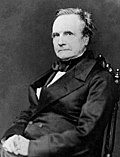
Malthus was an economist, cleric, and scholar working in the fields of political economy and demography. In 1798 he published An Essay on the Principle of Population, observing that whenever food production improved, populations grew until the lower classes were pushed back into hardship, want, and greater susceptibility to war, famine, and disease. He called it inevitable: "The power of population is indefinitely greater than the power in the earth to produce subsistence for man." As an Anglican cleric, he saw the trap as divinely imposed to teach virtue. He opposed the Poor Laws, saying they caused inflation rather than helping the poor, and supported grain import taxes. His pessimism - that real progress toward a better society was precluded by biology - cut against the prevailing 18th-century belief in human perfectibility. Charles Darwin and Alfred Russel Wallace read him; so did Thomas Jefferson and James Madison. His failure to foresee the Industrial Revolution became a standard critique, but his framework laid the theoretical foundation for nearly two centuries of debate on hunger and famine.
Academics from the United Kingdom 6



Fame.am measures public visibility signals. It does not measure human value, talent, morality, or credibility.