Theodoric the Great
King of the Germanic Ostrogoths and ruler of Italy (493-526) · Historical Figures · Lived 454 to 526 · aged 72
Theodoric the Great is read about 1,371 times a day, in 79 languages.
A typical day, 30 days to 15 October 2026
The middle day of the days counted, so one week of news cannot move it. The line under it is the last 390 days, one point a day.
Something wrong?The barbarian boy who became Rome's shadow emperor. Theodoric the Great ruled Italy for thirty-three years without ever calling himself Augustus, yet he wore the imperial regalia, named consuls, and stretched his Gothic empire from the Atlantic to the Adriatic - Roman in everything but the title.
Also in Deutsch
Photos 8
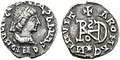
 Theoderic Quarter Siliqua 80000847
 Alojz Eberl - Teoderik, kralj Vzhodnih Gotov
 Alojz Eberl - Teodorik, gotski kralj
 Dieterich von Bern
 Frammenti della c.d. corazza di teodorico, d'arte ostrogota del V-VI secolo, e altri monili
 GER Ingolstadt, Theoderichstraße 0001
 Gesta Theodorici - Theodoric the Great (455-526)
 Hermann Knackfuß - Envoys from Estonia, Livonia and Scandinavia bringing gifts to the court of Theoderic in Ravenna
In their own words 1
 ,
He who has trembled before the pedagogue's rod will not face the spear willingly.
Family
Parents
Theodoric the GreatPartners
Children


Is this everyone?
Only relatives with a profile here are drawn, so a family can be larger than this. A line here can also be wrong.
Correct this familyAbout this person
Born around 454 to Ostrogothic nobility, Theodoric spent his childhood as a hostage in Constantinople, where he received a Roman education that would shape his vision of rule. He returned to Pannonia around 470 and fought his way to kingship in 471, spending the next decade and a half locked in battles with Sarmatians and rival Goths while playing a dangerous game with the Eastern emperor - serving as his commander and consul even as he raided imperial territory. In 489, at Zeno's urging, Theodoric invaded Italy and defeated King Odoacer in 493, inheriting a realm he would govern with a curious blend of Gothic power and Roman administration. He built monuments across Italy, expanded into the Balkans by 505, and by 511 controlled the Visigothic kingdom of Spain outright while holding sway over the Burgundians and Vandals. He died in 526 and was laid to rest in a mausoleum in Ravenna, but his afterlife proved longer: he became Dietrich von Bern, the hero of Germanic legend.
Historical Figures born in the 450s 6


Fame.am measures public visibility signals. It does not measure human value, talent, morality, or credibility.