Theodor Svedberg
Swedish chemist (1884-1971) · Sweden · Scientists · Died at 86
Theodor Svedberg is read about 56 times a day, in 64 languages.
A typical day, 30 days to 6 October 2026
The middle day of the days counted, so one week of news cannot move it. The line under it is the last 381 days, one point a day.
Something wrong?He spun matter faster than it had ever been spun before, and in doing so made the invisible weights of proteins visible - work that earned a Swedish chemist the 1926 Nobel Prize and changed how science measures the molecular world.
A life in dates
Also in Deutsch
Photos 8


.jpg?width=1200)


Awards
Family
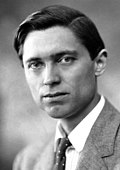 Theodor Svedberg
Partners

Children


Is this everyone?
Only relatives with a profile here are drawn, so a family can be larger than this. A line here can also be wrong.
Correct this familyAbout this person
Theodor Svedberg arrived at Uppsala University in the mid-1900s as a docent, studying colloids and proteins with a machine of his own crucial development: the ultracentrifuge. By 1912 he'd become the university's head of physical chemistry, a position he held through the late 1940s while his centrifuge work redrew the boundaries of what could be measured at molecular scale. The Nobel came in 1926; external recognition followed with election to the Royal Society in 1944 and the National Academy of Sciences in 1945. He left Uppsala in 1949 to direct the Gustaf Werner Institute, remaining there until 1967 - nearly two decades past the prize, still working.




Fame.am measures public visibility signals. It does not measure human value, talent, morality, or credibility.