Sune Bergström
Swedish biochemist (1916-2004) · Sweden · Scientists · Died at 88
Sune Bergström is read about 50 times a day, in 52 languages.
A typical day, 30 days to 8 October 2026
The middle day of the days counted, so one week of news cannot move it. The line under it is the last 76 days, one point a day.
Something wrong?He untangled the biochemistry of prostaglandins - molecules that regulate inflammation, blood flow, and pain - work that earned him the Nobel Prize in 1982 and quietly underpins much of modern medicine.
A life in dates
Also in Deutsch
Photos 6


.jpg?width=1200)

Awards
Family
Parents
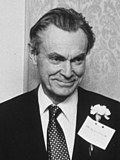 Sune Bergström
Partners

Is this everyone?
Only relatives with a profile here are drawn, so a family can be larger than this. A line here can also be wrong.
Correct this familyAbout this person
Karl Sune Detlof Bergström was born on 10 January 1916 in Sweden. His research into prostaglandins and related substances, shared with Bengt I. Samuelsson and John R. Vane, led to the 1982 Nobel Prize in Physiology or Medicine. By then he'd already spent years inside the machinery of Swedish science: elected to the Royal Swedish Academy of Sciences in 1965, its president in 1983, appointed to the Nobel Foundation Board in 1975. He collected honors along the way - the Louisa Gross Horwitz Prize in 1975, the Cameron Prize in 1977, the Illis quorum in 1985 - and joined academies on two continents. In 1943 he married Maj Gernandt; they had a son, Rurik Reenstierna, born in 1955. That same year another son, Svante Pääbo, was born from an affair with Estonian chemist Karin Pääbo - a fact Rurik only learned around 2004, the year Bergström died. Svante would go on to win his own Nobel in 2022.
In common with Sune


Scientists from Sweden 1

Fame.am measures public visibility signals. It does not measure human value, talent, morality, or credibility.