Siméon Denis Poisson
French mathematician, mechanician and physicist (1781-1840) · France · Academics · Died at 58
Siméon Denis Poisson is read about 254 times a day, in 32 languages.
A typical day, 30 days to 16 September 2026
The middle day of the days counted, so one week of news cannot move it. The line under it is the last 361 days, one point a day.
Something wrong?A French mathematician whose name survives in the Poisson distribution, the Poisson equation, and half a dozen other foundational tools - though he's equally remembered for trying to kill wave theory and accidentally predicting the bright spot that proved it correct.
Also in Deutsch
Photos 8


In their own words 2
 ,
In many different fields, empirical phenomena appear to obey a certain general law, which can be called the Law of Large Numbers.
That which can affect our senses in any manner whatever, is termed matter.
Awards
Family
Siméon Denis PoissonChildren
Is this everyone?
Only relatives with a profile here are drawn, so a family can be larger than this. A line here can also be wrong.
Correct this familyAbout this person
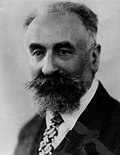
Siméon Denis Poisson was born on 21 June 1781 and spent his career ranging across statistics, complex analysis, partial differential equations, analytical mechanics, electricity, magnetism, thermodynamics, elasticity, and fluid mechanics. In attempting to disprove Augustin-Jean Fresnel's wave theory of light, he predicted what's now called the Arago spot - a bright point that should appear in the shadow of a disk - expecting the result to be absurd; when the spot was observed, it became one of wave theory's strongest confirmations. His physical interpretations were often overturned by later work, but the mathematics he developed while tackling those problems endured. He died on 25 April 1840, having shown that the right question in physics could yield lasting ideas in pure math, even when the answer turned out wrong.




Fame.am measures public visibility signals. It does not measure human value, talent, morality, or credibility.