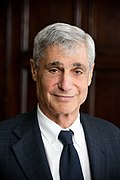
Robert Rubin
✓ Source-basedfallingAmerican banking executive, 70th US Treasury Secretary
A Goldman Sachs co-chairman who became Treasury secretary and helped steer the Clinton boom, now carries a second reputation: architect of the deregulation critics say greased the rails for 2008.
Also inDeutsch
Photos 3


In their own words 10
The challenges of opposing authoritarianism can be great. But the ever greater consequences, if authoritarianism is left to continue, can be many times more severe.
"Why Have Business Leaders Gone Silent?", Wall Street Journal (January 15, 2026)
When the business community and our leaders cease to speak out on matters of public concern, they turn their backs on the foundations of our country's success.
"Why Have Business Leaders Gone Silent?", Wall Street Journal (January 15, 2026)
Free markets can't be separated from other freedoms Americans have cherished and sometimes taken for granted.
"Why Have Business Leaders Gone Silent?", Wall Street Journal (January 15, 2026)
On YouTube
15 subscribersAwards 2
In their orbit 1
Connected to Robert 6
 Gary SiniseAlso won Presidential Citizens Medal
 Celia CruzAlso won honorary doctor of the University of Miami
 Bennie ThompsonAlso won Presidential Citizens Medal
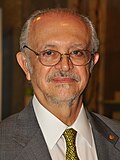 Mario MolinaAlso won honorary doctor of the University of Miami
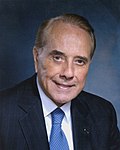 Bob DoleAlso won Presidential Citizens Medal
 David RockefellerAlso won honorary doctor of the University of Miami
About this person
Robert Edward Rubin was born August 29, 1938, and spent 26 years at Goldman Sachs, rising to co-chairman from 1990 to 1992 before leaving for Washington. As the 70th United States secretary of the treasury under Clinton, he drove the 1993 Deficit Reduction Act and the Balanced Budget Act of 1997, moves credited with powering the prosperity of that decade. The bank-friendly tilt of those policies drew a harder light after the 2008 financial crisis, when critics traced some of the wreckage back to the deregulation he championed. Since leaving government, Rubin co-founded the Hamilton Project, serves as co-chair emeritus of the Council on Foreign Relations, and works as a senior counselor at Centerview Partners.
 United States
Fame.am measures public visibility signals. It does not measure human value, talent, morality, or credibility.