Richard III of England
King of England from 1483 to 1485 · United Kingdom · Historical Figures · Lived 1452 to 1485 · aged 32
Richard III of England is read about 5,819 times a day, in 80 languages.
A typical day, 30 days to 15 October 2026
The middle day of the days counted, so one week of news cannot move it. The line under it is the last 390 days, one point a day.
Something wrong?The last English king killed in battle, and the one later dug up from a parking lot. Richard III's two-year reign ended on a Leicestershire field in 1485, but the arguments about what he did - or didn't do - to two young princes have outlasted him by five centuries.
Also in Deutsch
Photos 8
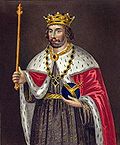
 Richard III earliest surviving portrait
 Anchorite House - geograph.org.uk - 2487297
 Anchorite House Remains
 Battlefield plaque (4237110243)
 Bodleian Libraries, Account of the opening of the Royal Circus, in St. George's Fields, on Monday, Nov. 4, 1782
 Reputed to be the tomb of Richard Plantagenet - geograph.org.uk - 1198848
 Imperial courts of France, England, Russia, Prussia, Sardinia, and Austria (1863) (14760128386)
 Imperial courts of France, England, Russia, Prussia, Sardinia, and Austria. Richly illustrated with portraits of imperial sovereigns and their cabinet ministers' with biographical sketches (1863) (14583504948)
In their own words 1
 ,
Right trusty and well beloved, we greet you well.
Awards
Family
Parents

 Richard III of England
Partners

Children

Brothers and sisters


Is this everyone?
Only relatives with a profile here are drawn, so a family can be larger than this. A line here can also be wrong.
Correct this familyAbout this person
Richard became Duke of Gloucester in 1461 when his brother Edward IV took the throne during the Wars of the Roses, the Yorkist-Lancastrian struggle that consumed the royal family. He married Anne Neville in 1472 and governed northern England until Edward died in April 1483, leaving a twelve-year-old heir. Richard was named Lord Protector, but before the coronation Edward IV's marriage was declared invalid, the children illegitimate, and on 25 June an assembly proclaimed Richard the rightful king. The boy-king and his younger brother, the "Princes in the Tower," vanished from the Tower of London that August. Two rebellions followed: one in October 1483 led by the Duke of Buckingham, another in August 1485 when Henry Tudor landed in Wales with French troops and marched through Pembrokeshire. Richard's army fell near Market Bosworth; he died in the fight, was buried without ceremony in Leicester, and spent five centuries under a parking lot before archaeologists confirmed the skeleton in 2012.
Historical Figures from the United Kingdom 6



Fame.am measures public visibility signals. It does not measure human value, talent, morality, or credibility.