Richard E. Taylor
Canadian physicist (1929-2018) · Canada · Scientists · Died at 88
Richard E. Taylor is read about 36 times a day, in 65 languages.
A typical day, 30 days to 15 October 2026
The middle day of the days counted, so one week of news cannot move it. The line under it is the last 83 days, one point a day.
Something wrong?He fired electrons at protons hard enough to see what was inside - and found quarks weren't just math, they were real.
A life in dates
Also in Deutsch
Photos 4


Awards
About this person
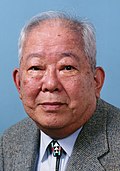
Richard Edward Taylor was born on 2 November 1929 in Canada and became a physicist at Stanford University. Working with Jerome Friedman and Henry Kendall, he conducted pioneering investigations into deep inelastic scattering, firing electrons at protons and bound neutrons with enough energy to probe their internal structure. The experiments provided essential evidence for the quark model in particle physics, confirming that protons and neutrons were not fundamental particles but composite structures. The three shared the 1990 Nobel Prize in Physics for the work. Taylor died on 22 February 2018.
In common with Richard


Fame.am measures public visibility signals. It does not measure human value, talent, morality, or credibility.