Pierre Boulez is read about 382 times a day, in 53 languages.
Counted to 12 September 2026, not since.
The middle day of the days counted, so one week of news cannot move it. The line under it is the last 357 days, one point a day.
Something wrong?He remade classical music twice: first by composing some of the most uncompromising modernist works of the 20th century, then by conducting the world's great orchestras with the same rigor he brought to the page. The polemics were as sharp as the scores.
A life in dates
 Boulez Conducts WebernAlbum, 1995Carter: A Symphony of Three Orchestras / Varèse: Deserts; Ecuatorial; HyperprismAlbum, 1995Daphnis et Chloé / La ValseAlbumDivertimento / Dance Suite / Hungarian Sketches / Deux ImagesAlbumEt exspecto resurrectionem mortuorum / Chronochromie / La Ville d'en HautAlbum, 1995Mahler: Rückert-Lieder / Wagner: Wesendonck-LiederAlbumPiano RecitalAlbumPulcinella / The Song of the Nightingale / The Nightingale / L'Histoire du SoldatAlbum, 1995Symphony no. 6Album199420th Century Music for Unaccompanied ClarinetAlbumBartók: The wooden prince / Music for Strings, Percussion and Celesta / Dance Suite / Scriabin: Le Poeme De L'ExtaseAlbum, 1994Boléro / Ma mère l'Oye / Rapsodie espagnole / Alborada del GraciosoAlbumConcerto pour Flûte / Concerto pour VioloncelleAlbum1992Theodor W. Adorno AwardAward1988Honorary Doctorate of the Vrije Universiteit BrusselAward1985Léonie Sonning Music PrizeAward1983Austrian Decoration for Science and ArtAward1979Commander of the Order of the British EmpireAward1952“Any musician who has not experienced - I do not say understood, but truly experienced - the necessity of dodecaphonic music is USELESS.”In their wordsEmphasis in the original. From "Eventuellement..." (1952), translated as "Possibly..." in Stocktakings from an Apprenticeship, Oxford:“Creation exists only in the unforeseen made necessary.”In their wordsFrom "Éventuellement..." (1952), translated as "Possibly..." in Stocktakings from an Apprenticeship, Oxford: Oxford University Press, 1991,1925Born26 March 1925
Also in Deutsch
Photos 8
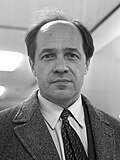
 Pierre Boulez (1968)
 2024-12-07 Musik Kiosk Hannover City of Music 74
 2024-12-07 Musik Kiosk Hannover City of Music 76
 Baden-Baden-Hauptfriedhof-25-Grabmal Boulez-2016-gje
 Baden-Baden-Hauptfriedhof-Grabmal Pierre Boulez-10-hf07-2021-gje
 Boulez - Messagesquisse, Sacher hexachord
 Graf Boulez Baden-Baden
 Gravesite of Pierre Boulez (51698654114)
In their own words 2
 ,
Any musician who has not experienced - I do not say understood, but truly experienced - the necessity of dodecaphonic music is USELESS.
Creation exists only in the unforeseen made necessary.
Listen
SpotifyAlbums 24
 BIBoulez Conducts Webern, IIBWBoulez Conducts Webern
Awards
About this person
Born in Montbrison in 1925, son of an engineer, Boulez studied with Olivier Messiaen at the Conservatoire de Paris before becoming music director of a Paris theatre company in the late 1940s. He drove the development of integral serialism in the '50s, controlled chance music in the '60s, and real-time electronic transformation from the '70s onward - his constant revisions kept the catalog small but dense with landmarks like Le Marteau sans maître, Pli selon pli, and Répons. That same intensity carried into a sixty-year conducting career: music director of the New York Philharmonic, chief conductor of the BBC Symphony, principal guest in Chicago and Cleveland, defining interpreter of Debussy, Ravel, Stravinsky, the Second Viennese School, and his own era. He founded the Domaine musical to promote new music, later IRCAM for research and the Ensemble intercontemporain for performance, then co-founded the Cité de la musique and the Lucerne Festival Academy. He died in January 2016, leaving a recorded legacy as extensive as the institutions he built.
In common with Pierre
 Magdalena KoženáAlso in Mahler: Des Knaben Wunderhorn / Adagio from Symphony No. 10 (2011)
 Christian GerhaherAlso in Mahler: Des Knaben Wunderhorn / Adagio from Symphony No. 10 (2011)
 Paul van VlietBoth received Edison Music Awards
 Tōru TakemitsuBoth received Glenn Gould Prize
 Esa-Pekka SalonenBoth received Royal Philharmonic Society Award (Conductor)
 Cindy ShermanBoth received Wolf Prize in Arts
Fame.am measures public visibility signals. It does not measure human value, talent, morality, or credibility.