Paul Samuelson
American economist (1915-2009) · United States · Academics · Died at 94
Paul Samuelson is read about 363 times a day, in 81 languages.
A typical day, 30 days to 15 October 2026
The middle day of the days counted, so one week of news cannot move it. The line under it is the last 390 days, one point a day.
Something wrong?The first American to win the Nobel in economics, he turned the field into mathematics and wrote the textbook that taught most of the profession how to think - selling over four million copies across four decades.
A life in dates
Also in Deutsch
Photos 8
 32. Tagung 1982 Physiker; Mainaufahrt James E. Meade, Robert Wilson, Paul Samuelson im Profil - W134Nr.119165d - Willy Pragher
 Ford-MIT Nobel Laureate Lecture Series 2000-09-18
 Micro history economists
 Paul A. Samuelson close-up (cropped)
 Paul A. Samuelson, economist, edited
 Paul A. Samuelson, economist
 Paul Samuelson
 Samuelson01
Awards
In their orbit
About this person
Born May 15, 1915, Samuelson came of age convinced that mathematics was the "natural language" for economists, a belief he formalized in Foundations of Economic Analysis. In 1948 he published Economics: An Introductory Analysis, the second American textbook to explain Keynesian principles - it became the best-selling economics text of all time. He advised Kennedy and Johnson, consulted for the Treasury and Budget Bureau, and spent years sparring in Newsweek with Milton Friedman, the two economists representing opposite poles: Samuelson the self-described "Cafeteria Keynesian," Friedman the monetarist. When the Swedish Royal Academies awarded him the Nobel in 1970, they said he had done more than any contemporary to raise the level of scientific analysis in the field. He died December 13, 2009, having reshaped how economics was practiced and taught.
In common with Paul
 Milton FriedmanBoth received John Bates Clark Medal
 Amartya SenBoth received Prize in Economic Sciences in Memory of Alfred Nobel
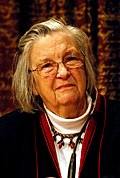 Elinor OstromBoth received Prize in Economic Sciences in Memory of Alfred Nobel
 Joseph StiglitzBoth received John Bates Clark Medal
 Paul KrugmanBoth received John Bates Clark Medal
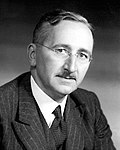 Friedrich HayekBoth received Prize in Economic Sciences in Memory of Alfred Nobel
Fame.am measures public visibility signals. It does not measure human value, talent, morality, or credibility.