Paul-Henri Spaak
Belgian politician (1899-1972) · Belgium · Politicians · Died at 73
Paul-Henri Spaak is read about 274 times a day, in 49 languages.
A typical day, 30 days to 7 October 2026
The middle day of the days counted, so one week of news cannot move it. The line under it is the last 75 days, one point a day.
Something wrong?They called him "Mr. Europe" - the Belgian socialist who chaired the first UN General Assembly in 1945, then spent the next decade laying track for what became the European Union. Spaak wrote the treaty that created the Common Market and ran NATO, all while holding Belgium's foreign ministry for 18 years.
A life in dates
Also in Deutsch
Photos 8
 Bundesarchiv Bild 183-39998-0427, Paul-Henri Spaak
 76 Als polítics belgues H. Pierlot i P.H. Spaak, pg. de Gràcia
 Aankomst Belgische premier Harmel en Minister Spaak , Minister Cals begroet prem, Bestanddeelnr 918-1892
 Aankomst Belgische premier Harmel en Minister Spaak bij Hollands Spoor te Den Ha, Bestanddeelnr 918-1891
 Aankomst Belgische premier Harmel en Minister Spaak, Bestanddeelnr 918-1893
 Aankomst Belgische premier Harmel en Minister Spaak, Bestanddeelnr 918-1894
 Aankomst Belgische premier Harmel en Minister Spaak, Bestanddeelnr 918-1895
 Aankomst Belgische premier Harmel en Minister Spaak, Bestanddeelnr 918-1896
In their own words 1
 ,
The real father of the Atlantic Alliance was Stalin. It is he who has the right to a monument in each of our countries.
Awards
Family
Parents
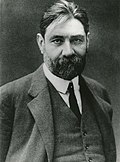 Paul-Henri Spaak
Children

Brothers and sisters

Is this everyone?
Only relatives with a profile here are drawn, so a family can be larger than this. A line here can also be wrong.
Correct this familyAbout this person
Paul-Henri Spaak came from an influential Belgian family, served briefly in World War I before capture, and built his name after the war as a tennis player and lawyer - gaining fame in 1929 for defending an Italian student accused of trying to assassinate Italy's crown prince. He entered politics as a socialist in 1932, became prime minister in 1938, and spent World War II as foreign minister in exile in London, where he negotiated the Benelux Customs Union. After the war he served two more brief stints as premier but made his real mark abroad: first president of the Council of Europe's assembly, first president of what would become the European Parliament, chair of the committee that prepared the 1957 Treaty of Rome establishing the European Economic Community, then NATO secretary general from 1957 to 1961. He retired from Belgian politics in 1966 and died six years later, leaving his name on a foundation, a negotiation method, and a building of the parliament he helped create.


Fame.am measures public visibility signals. It does not measure human value, talent, morality, or credibility.