Paul Berg
American biochemist, Professor emeritus at Stanford University & Nobel laureate in Chemistry (1926-2023) · United States · Academics · Died at 96
Paul Berg is read about 77 times a day, in 63 languages.
Counted to 16 September 2026, not since.
The middle day of the days counted, so one week of news cannot move it. The line under it is the last 361 days, one point a day.
Something wrong?He cut and pasted DNA for the first time - the move that made genetic engineering possible and set off a debate over whether scientists should police themselves before regulators stepped in.
A life in dates
Also in Deutsch
Photos 7
 Paul Berg in 1980
 Koninginnen, onderscheidingen, Beatrix (koningin Nederland), Bestanddeelnr 932-6823
 Koninginnen, onderscheidingen, Beatrix (koningin Nederland), Bestanddeelnr 932-6825
 Queen Beatrix meets Nobel Laureates in 1983
 Queen Beatrix meets Nobel Laureates in 1983b
 Queen Beatrix meets Nobel Laureates in 1983c
 Paul Berg HD2008 t55 long view
Awards
In their orbit
About this person
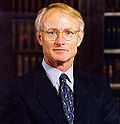
Paul Berg grew up in Brooklyn, studied biochemistry at Penn State, and earned his PhD from Case Western Reserve in 1952. He taught at Washington University School of Medicine before moving to Stanford, where he ran the Beckman Center for Molecular and Genetic Medicine. His lab pioneered recombinant DNA technology - splicing genetic material from different organisms - work that won him the 1980 Nobel Prize in Chemistry. The breakthrough also prompted Berg to organize the Asilomar Conference in 1975, where scientists voluntarily set safety guidelines for gene-splicing experiments before governments imposed them. He later received the National Medal of Science in 1983 and the National Library of Medicine Medal in 1986. Berg died in February 2023 at 96.
Academics from the United States 6



Fame.am measures public visibility signals. It does not measure human value, talent, morality, or credibility.