Patrick Blackett
British physicist (1897-1974) · United Kingdom · Scientists · Died at 76
Patrick Blackett is read about 224 times a day, in 75 languages.
A typical day, 30 days to 21 October 2026
The middle day of the days counted, so one week of news cannot move it. The line under it is the last 396 days, one point a day.
Something wrong?A physicist who cracked nuclear transmutation in the 1920s, won a Nobel, then spent the Cold War arguing against atomic overkill and pushing Britain's Labour Party toward science-led policy for the developing world.
A life in dates
Also in Deutsch
Photos 8


Awards
Family
Parents
 Patrick Blackett
Partners
Children
Is this everyone?
Only relatives with a profile here are drawn, so a family can be larger than this. A line here can also be wrong.
Correct this familyAbout this person
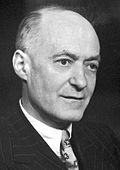
Patrick Blackett proved in 1925 that radioactivity could transmute one element into another - the first direct evidence of nuclear transformation. During World War II he turned his precision to strategy, helping develop operational research for the Allies. The 1948 Nobel Prize in Physics followed. But the bomb's aftermath pulled him into politics: he spoke out for restraints on atomic weapons, championed Third World development, and advised Labour on science policy through the 1950s and '60s. By his death in 1974, the Times called him the "Radical Nobel-Prize Winning Physicist" - a measure of how far he'd drifted from the lab into the argument.




Fame.am measures public visibility signals. It does not measure human value, talent, morality, or credibility.