Milton Friedman
American economist and statistician (1912-2006) · United States · Academics · Died at 94
Milton Friedman is read about 2,358 times a day, in 101 languages.
A typical day, 30 days to 15 October 2026
The middle day of the days counted, so one week of news cannot move it. The line under it is the last 390 days, one point a day.
Something wrong?He spent half a century dismantling the economic consensus of his time - first challenging how governments manage unemployment and inflation, then rewriting monetary policy itself.
A life in dates
Also in Deutsch
Photos 8
 Portrait Of Milton Friedman (cropped)
 Ford A0571 NLGRF photo contact sheet (1974-09-05)(Gerald Ford Library)
 ASSA 2026 - James Galbraith 01 (cropped)
 ASSA 2026 - James Galbraith 01
 ASSA 2026 - James Galbraith 02
 Bob Chitester and Milton Friedman
 Economics legends display inside front vestibule of Saieh Hall
 Ford A0047 NLGRF photo contact sheet (1974-08-11)(Gerald Ford Library)
In their own words 10
 ,
Make politics an avocation, not a vocation.
I have no right to coerce someone else, because I cannot be sure that I'm right and he is wrong.
Inflation is the one form of taxation that can be imposed without legislation.
Awards
Family
Milton FriedmanPartners

Children

Is this everyone?
Only relatives with a profile here are drawn, so a family can be larger than this. A line here can also be wrong.
Correct this familyAbout this person
Born July 31, 1912, Friedman led the Chicago school's intellectual charge against Keynesian orthodoxy, introducing the permanent income hypothesis to explain consumer behavior and among the first to model consumption smoothing. Through the 1960s he theorized a natural rate of unemployment and predicted stagflation by arguing the Phillips curve was vertical in the long run - a forecast that arrived on schedule. He championed monetarism: steady, small growth in money supply over volatile intervention. After retiring from Chicago in 1977, he advised Reagan and Thatcher while his 1962 Capitalism and Freedom laid out a vision of minimal state interference - volunteer military, floating exchange rates, school vouchers, an end to medical licensing and drug prohibition. When he died November 16, 2006, The Economist called him possibly the most influential economist of the entire 20th century.
In common with Milton
 Kato KaelinAlso in Beach Fever (1989)
 Paul KrugmanBoth received John Bates Clark Medal
 John Forbes Nash Jr.Both received Prize in Economic Sciences in Memory of Alfred Nobel
 Paul SamuelsonBoth received John Bates Clark Medal
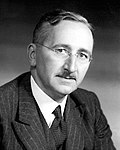 Friedrich HayekBoth received Prize in Economic Sciences in Memory of Alfred Nobel
 Joseph StiglitzBoth received John Bates Clark Medal
Fame.am measures public visibility signals. It does not measure human value, talent, morality, or credibility.