Max Scheler is read about 364 times a day, in 58 languages.
A typical day, 30 days to 15 October 2026
The middle day of the days counted, so one week of news cannot move it. The line under it is the last 390 days, one point a day.
Something wrong?A German philosopher who took Husserl's phenomenology and bent it toward ethics and the question of what human beings actually are - considered by Heidegger the strongest philosophical force in Europe before vanishing from most non-specialist conversation after his death in 1928.
Also in Deutsch
Photos 5


_-_Rudolf_Gro%C3%9Fmann_-_G_58_004_o_M_f_Neue_Kunst_Freiburg.png?width=1200)

In their own words 10
 ,
, It is peculiar to “ressentiment criticism” that it does not seriously desire that its demands be fulfilled. It does not want to cure the evil.
Existential envy which is directed against the other person’s very nature, is the strongest source of ressentiment.
The ultimate goal of the arriviste’s aspirations is not to acquire a thing of value, but to be more highly esteemed than others.
In their orbit
About this person
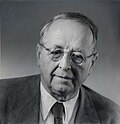
Max Ferdinand Scheler was born 22 August 1874 in Germany and spent his career extending Edmund Husserl's phenomenological method into territory Husserl hadn't claimed: ethics, emotion, the structure of personhood. By the 1920s he stood among the most prominent philosophers in Germany, working out a philosophical anthropology that asked what separates humans from animals and how values operate in lived experience. He died 19 May 1928, and in the aftermath both Martin Heidegger and Ortega y Gasset declared that every philosopher of the century owed him a debt. The tribute didn't stick - his name receded as the century moved on, lodged now mostly in specialist memory.
Academics from Germany 6



Fame.am measures public visibility signals. It does not measure human value, talent, morality, or credibility.