Marcel Mauss is read about 310 times a day, in 43 languages.
A typical day, 30 days to 16 September 2026
The middle day of the days counted, so one week of news cannot move it. The line under it is the last 361 days, one point a day.
Something wrong?Émile Durkheim's nephew who turned gifts, magic, and sacrifice into science - and in doing so built the scaffolding for how we study what holds societies together.
Also in Deutsch
Photos 4


In their own words 5
 ,
, In these 'early' societies, social phenomena are not discrete; each phenomenon contains all the threads of which the social fabric is composed.
The connection of exchange contracts among men with those between men and gods explains a whole aspect of the theory of sacrifice.
Among the first groups of beings with whom men must have made contracts were the spirits of the dead and the gods. They in fact are the real owners of the world's wealth.
About this person
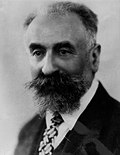
Born 10 May 1872, Marcel Israël Mauss followed his uncle Émile Durkheim into sociology but refused to stay inside its borders. He ranged across cultures, mapping the invisible rules behind magic, sacrifice, and exchange - treating ritual not as superstition but as social glue. His 1925 essay The Gift argued that seemingly free gestures carry obligation, that generosity binds people in webs of debt and reciprocity. The work became a foundation stone: Claude Lévi-Strauss built structural anthropology on it, and Mauss earned the title "father of French ethnology." He died 10 February 1950, having shown that the stranger the custom, the more universal the logic beneath it.


Fame.am measures public visibility signals. It does not measure human value, talent, morality, or credibility.