207,380 profiles ranked

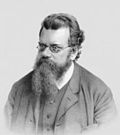
Konrad Lorenz

Austrian zoologist, winner of the Nobel Prize in Physiology or Medicine in 1973 (1903-1989) · Austria · Scientists · Died at 85

Konrad Lorenz is read about 589 times a day, in 80 languages.

A typical day, 30 days to 15 October 2026

The middle day of the days counted, so one week of news cannot move it. The line under it is the last 390 days, one point a day.

Something wrong?
Compare

He made goslings follow him around like a parent, then turned that image into a science. Lorenz showed that behavior isn't all learned - some of it locks in at first sight, no questions asked.

A life in dates

1989Died27 February 19891984Bavarian Maximilian Order for Science and ArtAward1983Honorary Citizen of ViennaAward1973“The same individual geese on which we conducted these experiments, first aroused my interest in the process of domestication.”In their wordsKonrad Lorenz Biographical, The Nobel Prize in Physiology or Medicine 1973.

“The competition between human beings destroys with cold and diabolic brutality....”In their wordspp 45-47

Nobel Prize in Physiology or MedicineAward1969Kalinga PrizeAwardPour le Mérite for Sciences and Arts orderAwardPrix mondial Cino Del DucaAward1966“It is a good morning exercise for a research scientist to discard a pet hypothesis every day before breakfast. It keeps him young.”In their wordsTrans. M. Latzke (1966), p. 8

1964Austrian Decoration for Science and ArtAwardForeign Member of the Royal SocietyAward1963“All too willingly man sees himself as the centre of the universe, as something not belonging to the rest of nature but standing apart as a different and higher being.”In their wordsCh. XII : On the Virtue of Scientific Humility

“We are the highest achievement reached so far by the great constructors of evolution. We are their "latest" but certainly not their last word.”In their wordsCh. XII : On the Virtue of Scientific Humility

“Nobody can seriously believe that free will means that it is left entirely to the will of the individual, as to an irresponsible tyrant, to do or not do whatever he pleases.”In their wordsCh. XII : On the Virtue of Scientific Humility

1959Prize of the City of Vienna for Natural SciencesAward1903Born7 November 1903

Also in Deutsch

Photos 8

In their own words 6

,
Konrad Lorenz
,
6 statements, newest first
  1. The same individual geese on which we conducted these experiments, first aroused my interest in the process of domestication.

    1973, Konrad Lorenz Biographical, The Nobel Prize in Physiology or Medicine 1973., Own words

  2. The competition between human beings destroys with cold and diabolic brutality....

    1973, pp 45-47, Own words

  3. It is a good morning exercise for a research scientist to discard a pet hypothesis every day before breakfast. It keeps him young.

    1966, Trans. M. Latzke (1966), p. 8, Own words

Wikiquote, CC BY-SA 4.0

Awards

Bavarian Maximilian Order for Science and Art1984
Honorary Citizen of Vienna1983
Nobel Prize in Physiology or Medicine1973
Prix mondial Cino Del Duca1969
Pour le Mérite for Sciences and Arts order1969
Kalinga Prize1969
Foreign Member of the Royal Society1964
Austrian Decoration for Science and Art1964
Prize of the City of Vienna for Natural Sciences1959
Great Cross with Star and Sash of the Order of Merit of the Federal Republic of Germany
Pour le Mérite

Family

Is this everyone?

Only relatives with a profile here are drawn, so a family can be larger than this. A line here can also be wrong.

Correct this family

About this person

Konrad Zacharias Lorenz was born 7 November 1903 in Austria and trained as a zoologist with a focus on birds. Working with greylag geese and jackdaws, he studied imprinting - the process by which certain hatchlings bond instinctively to the first moving thing they see - and though he didn't discover it, his descriptions made it widely known. In 1936 he met Nikolaas Tinbergen, and together they built ethology into its own branch of biology. World War II pulled him into the German Army as a medic; in 1944 he was captured on the Eastern Front and spent four years as a prisoner in Soviet Armenia, later regretting his Nazi Party membership. He shared the 1973 Nobel Prize in Physiology or Medicine with Tinbergen and Karl von Frisch, wrote popular books like King Solomon's Ring and On Aggression, and closed his career with Here I Am - Where Are You?, a summation built around those geese. He died 27 February 1989.

Country
Austria
Category
Scientists
Type
Scientist
Status
deceased
Dates
Lived 1903 to 1989 · aged 85

Fame.am measures public visibility signals. It does not measure human value, talent, morality, or credibility.