Karl von Frisch is read about 147 times a day, in 62 languages.
A typical day, 30 days to 6 October 2026
The middle day of the days counted, so one week of news cannot move it. The line under it is the last 381 days, one point a day.
Something wrong?He proved that bees talk to each other by dancing - a claim so strange that scientists dismissed it for decades.
A life in dates
Also in Deutsch
Photos 7


Awards
Family
Parents

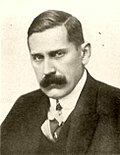
 Karl von Frisch
Brothers and sisters
Is this everyone?
Only relatives with a profile here are drawn, so a family can be larger than this. A line here can also be wrong.
Correct this familyAbout this person
Karl Ritter von Frisch was born in Vienna in 1886 and spent his career studying what honey bees could actually sense and how they behaved. In 1927 he published Aus dem Leben der Bienen, arguing that the waggle dance wasn't random movement but a language - bees were telling each other where to find food. The idea was met with skepticism and dispute from other scientists who found it too odd to believe. Decades passed before the theory was confirmed as accurate. In 1973, long after the initial ridicule, he received the Nobel Prize in Physiology or Medicine alongside Nikolaas Tinbergen and Konrad Lorenz. He died in 1982, his most controversial insight now textbook fact.




Fame.am measures public visibility signals. It does not measure human value, talent, morality, or credibility.