John Herschel
English polymath, mathematician, astronomer, chemist, inventor and photographer (1792-1871) · United Kingdom · Academics · Died at 79
John Herschel is read about 300 times a day, in 77 languages.
A typical day, 30 days to 15 October 2026
The middle day of the days counted, so one week of news cannot move it. The line under it is the last 390 days, one point a day.
Something wrong?He named eleven moons across Saturn and Uranus, invented the blueprint, and set astronomy's calendar to Julian days - a polymath's sweep through mathematics, chemistry, and early photography that left practical marks still in use.
A life in dates
Also in Deutsch
Photos 8
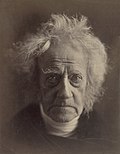
 John Herschel by Jula Margaret Cameron, Abril 1867
 'J F W Herschel' RMG PU3685
 'J.F.Wm. Herschel' RMG PU3684
 Sir John Frederick William Herschel. Wood engraving, 1871. Wellcome V0002720
 Sir John Frederick William Herschel. Wood engraving, 1871. Wellcome V0002721
 Sir John Frederick William Herschel. Stipple engraving by D. Wellcome V0002718
 Sir John Frederick William Herschel. Stipple engraving. Wellcome V0002723
 John Herschel00
In their own words 8
 ,
, What God sends is welcome.
We must never forget that it is principles, not phenomena, - laws not insulated independent facts, - which are the objects of inquiry to the natural philosopher.
To ascend to the origin of things and speculate on the creation, is not the business of the natural philosopher.
Awards
Family
Parents
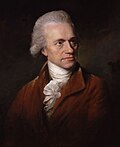 John Herschel
Partners
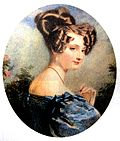
Children

Is this everyone?
Only relatives with a profile here are drawn, so a family can be larger than this. A line here can also be wrong.
Correct this familyAbout this person
Born 7 March 1792, John Frederick William Herschel grew up in the shadow of his father William, who had discovered Uranus. He ranged across disciplines: mathematics, astronomy, chemistry, invention. He gave names to seven moons of Saturn and four around his father's planet, originated the Julian day system that astronomers still keep time by, and pioneered experimental photography - including the blueprint process. His investigations ran to colour blindness and ultraviolet's chemical effects. In 1831 his Preliminary Discourse laid out an inductive method for science, shaping how theory should rise from experiment. He died 11 May 1871, a baronet who had touched more fields than most specialists ever see.
Academics from the United Kingdom 6


Fame.am measures public visibility signals. It does not measure human value, talent, morality, or credibility.