John B. Watson
American psychologist (1878 · United States · Politicians
John B. Watson is read about 751 times a day, in 60 languages.
A typical day, 30 days to 6 October 2026
The middle day of the days counted, so one week of news cannot move it. The line under it is the last 381 days, one point a day.
Something wrong?He built modern psychology on a premise that infuriated humanists: that thoughts and feelings don't matter, only what you can see and measure. Watson stripped the mind from the science of behavior, then proved it with a baby and a white rat.
Also in Deutsch
Photos 1

Family
 John B. Watson
Partners
Children
Is this everyone?
Only relatives with a profile here are drawn, so a family can be larger than this. A line here can also be wrong.
Correct this familyAbout this person
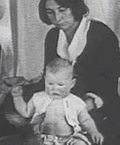
John Broadus Watson was born January 9, 1878, and by 1913 had drawn a line in the sand at Columbia University with an address that redefined psychology as the study of observable behavior alone. He edited Psychological Review from 1910 to 1915 while running experiments that ranged from animal studies to the infamous "Little Albert" test, conditioning an infant to fear a white rat. After psychology, he turned the same principles to advertising and child-rearing advice. A 2002 survey ranked him the 17th most cited psychologist of the 20th century. He died September 25, 1958, having spent decades watching behaviorism - his creation - split the field he'd tried to unify.
Politicians from the United States 6



Fame.am measures public visibility signals. It does not measure human value, talent, morality, or credibility.