Jan Tinbergen
Dutch economist (1903-1994) · Netherlands · Academics · Died at 91
Jan Tinbergen is read about 122 times a day, in 65 languages.
A typical day, 30 days to 15 October 2026
The middle day of the days counted, so one week of news cannot move it. The line under it is the last 390 days, one point a day.
Something wrong?He built the first working models of entire economies - systems of equations that let governments test policy before enacting it. The machinery he invented turned economics from philosophy into engineering, and in 1969 it won him half of the first economics Nobel ever awarded.
A life in dates
Also in Deutsch
Photos 8
 Jan Tinbergen 1982
 Ehrenfeststudents
 Jan Tinbergen
 Jan Tinbergen 1967
 Achter de tafel vlnr mevrouw Dreesen, prof. dr. Jan Tinbergen, de heer Bijl en , Bestanddeelnr 930-5387
 Achter de tafel vlnr mevrouw Dreesen, prof. dr. Jan Tinbergen, de heer Bijl en , Bestanddeelnr 930-5388
 Conferentie NOVIB Wapens en Welzijn ter ere van Ned. vert. prof. Jan Tinbergen, Bestanddeelnr 934-0037
 Conferentie, door de Dr. Wiardi Beckman stichting , v.l.n.r. Vondeling, Langemei, Bestanddeelnr 918-7831
In their own words 10
 ,
Mankind’s problems can no longer be solved by national governments. What is needed is a World Government. This can best be achieved by strengthening the United Nations system.
To Ehrenfest I owe a great deal. I studied physics at a time when a number of fascinating persons were there together.
For some queer and deplorable reason most human beings are more impressed by words than by figures, to the great disadvantage of mankind.
Awards
Family
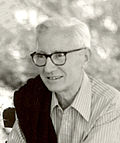
Is this everyone?
Only relatives with a profile here are drawn, so a family can be larger than this. A line here can also be wrong.
Correct this familyAbout this person
Jan Tinbergen was born in the Netherlands on 12 April 1903. He developed the first macroeconometric models - mathematical frameworks that captured how economies actually moved - and solved the identification problem that had stalled earlier attempts to read causation from data. In 1945 he founded the Bureau for Economic Policy Analysis, serving as its first director and proving that his models could guide real policy. The work earned him the inaugural Nobel Memorial Prize in Economic Sciences in 1969, shared with Ragnar Frisch for applying dynamic models to economic processes. He became a founding trustee of Economists for Peace and Security. He died on 9 June 1994, widely considered one of the founding fathers of econometrics and among the most influential economists of the twentieth century.
In common with Jan
 Daron AcemoğluBoth received Prize in Economic Sciences in Memory of Alfred Nobel
 Philippe AghionBoth received Prize in Economic Sciences in Memory of Alfred Nobel
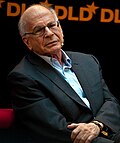 Daniel KahnemanBoth received Prize in Economic Sciences in Memory of Alfred Nobel
 Jean TiroleBoth received Prize in Economic Sciences in Memory of Alfred Nobel
 Herbert A. SimonBoth received Prize in Economic Sciences in Memory of Alfred Nobel
 Gunnar MyrdalBoth received Prize in Economic Sciences in Memory of Alfred Nobel
Fame.am measures public visibility signals. It does not measure human value, talent, morality, or credibility.