Ivan Bunin is read about 1,292 times a day, in 99 languages.
A typical day, 30 days to 15 October 2026
The middle day of the days counted, so one week of news cannot move it. The line under it is the last 390 days, one point a day.
Something wrong?The first Russian to win the Nobel Prize in Literature, in 1933, for prose and poetry so finely worked his peers called it "Bunin brocade" - a style that carried the classical line from Tolstoy and Chekhov into exile.
Also in Deutsch
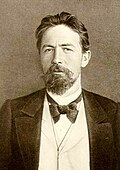
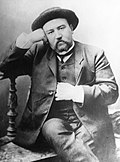
Photos 8


In their own words 2
 ,
Jealousy is not appreciating the loved one.
Men are lying when they say they are terrified of blood.
Awards
In their orbit 3

About this person
Ivan Alekseyevich Bunin was born on 22 October 1870 into the tradition he would later preserve with near-religious care: the realist school of Russian letters. His short novels The Village (1910) and Dry Valley (1912) established his reputation for strict artistry and linguistic richness, a texture in prose considered among the finest in the language. By 1917 the revolution had begun, and Bunin chronicled its chaos in the diary Cursed Days, published in 1926 after he'd joined the white emigration. In 1933 he completed the autobiographical novel The Life of Arseniev and won the Nobel Prize that same year, the first Russian so honored. He spent his last decades in Europe, where critics and fellow exiles revered him as the keeper of a flame, and published Dark Avenues in 1946, a story collection that deepened his claim to the lineage. He died in Paris on 8 November 1953, the tradition intact in his hands to the end.


Fame.am measures public visibility signals. It does not measure human value, talent, morality, or credibility.