207,380 profiles ranked

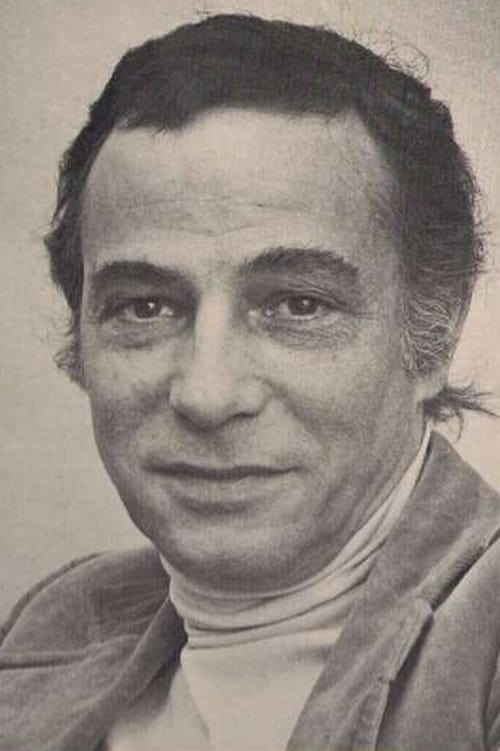
Isaac Asimov

American writer and biochemist (1920-1992) · United States · Writers · Died at 72

Isaac Asimov is read about 6,598 times a day, in 121 languages.

A typical day, 30 days to 15 October 2026

The middle day of the days counted, so one week of news cannot move it. The line under it is the last 390 days, one point a day.

Something wrong?
Compare

He wrote or edited more than 500 books and an estimated 90,000 letters - a biochemistry professor who turned pulp science fiction into architecture, building whole civilizations across time and then connecting them into one vast future history.

A life in dates

2018Retro Hugo Award for Best NoveletteAward2006Great Immigrants AwardAward2003The Return of the Black WidowersBook published after his death, 2003 short story collection by Isaac Asimov1997Science Fiction and Fantasy Hall of FameAward, after his death1996Retro Hugo Award for Best NovelAward1995The Nations in SpaceBook published after his deathMarch 1995, short story by Isaac AsimovGoldBook published after his death, Collection of Isaac Asimov's stories and essays1995Hugo Award for Best Related WorkAward, after his death, award conferred by World Science Fiction Society1995MagicBook published after his death, collection of short stories and essays by Isaac Asimov19951993Forward the FoundationBook published after his deathApril 1993, 1993 novel by Isaac Asimov1992The Positronic ManBook published after his deathOctober 1992, 1992 novel by Isaac Asimov and Robert SilverbergDied6 April 1992Hugo Award for Best NoveletteAward1987Locus Award for Best Short StoryAward1985Cosmos 2000 AwardAward1983Locus Award for Best Science Fiction NovelAward1977Hugo Award for Best NoveletteAwardNebula Award for Best NoveletteAward1975Klumpke-Roberts AwardAward1973Hugo Award for Best NovelAwardNebula Award for Best NovelAward1966Hugo Award for Best All-Time SeriesAward1965“Predicting the future is a hopeless, thankless task, with ridicule to begin with and, all too often, scorn to end with.”In their wordsJanuary 1965"The World of 1990" in The Diners' Club Magazine, January 1965

“History is a story without an end.”In their wordsThe Greeks: A Great Adventure (1965), p. 307

1963Hugo AwardAward1962“The dullness of fact is the mother of fiction.”In their wordsFact and Fancy (1962), p. 11

1960“People who want to do so can lose weight most safely and permanently if they realize that above all they must be patient. ...”In their wordsOctober 1960"The Hungry People" (October 1960) in Mademoiselle, reprinted in Is Anyone There? (1967), pp. 48-49

1959“It is only afterward that a new idea seems reasonable. To begin with, it usually seems unreasonable.”In their words"How Do People Get New Ideas?" (1959)

1920Born2 January 1920

Also in Deutsch

Photos 8

In their own words 10
,
Isaac Asimov
,
10 statements, newest first
  1. Ten years on the moon could tell us more about the universe than a thousand years on the earth might be able to.

    Mar 1965, What Can We Expect of the Moon?" in The American Legion Magazine, March 1965, Own words

  2. Predicting the future is a hopeless, thankless task, with ridicule to begin with and, all too often, scorn to end with.

    Jan 1965, "The World of 1990" in The Diners' Club Magazine, January 1965, Own words

  3. The fact that the general incidence of leukemia has doubled in the last two decades may be due, partly, to the increasing use of x-rays for numerous purposes.

    1965, Statement of 1965, as quoted without citation of a specific work in Isaac Asimov’s Book of Science and Nature Quotations (1988), edited by, Own words

Wikiquote, CC BY-SA 4.0

On YouTube

26 subscribers
Open channel on YouTube

Awards

Retro Hugo Award for Best Novelette2018
Retro Hugo Award for Best Short Story2016
Great Immigrants Award2006
Science Fiction and Fantasy Hall of Fame1997
Retro Hugo Award for Best Novel1996
Hugo Award for Best Related Work1995
Hugo Award for Best Novelette1992
Damon Knight Memorial Grand Master Award1987
Locus Award for Best Short Story1987
Cosmos 2000 Award1985
Humanist of the Year1984
Locus Award for Best Science Fiction Novel1983
Hugo Award for Best Novel1983
Hugo Award for Best Novelette1977
Nebula Award for Best Novelette1977
Locus Award for Best Novelette1977
Klumpke-Roberts Award1975
Locus Award for Best Reprint Anthology/Collection1975
Hugo Award for Best Novel1973
Nebula Award for Best Novel1973
Locus Award for Best Novel1973
Edward E. Smith Memorial Award1967
Hugo Award for Best All-Time Series1966
James T. Grady-James H. Stack Award for Interpreting Chemistry1965
Hugo Award1963
Fellow of the Committee for Skeptical Inquiry
Fellow of the American Academy of Arts and Sciences
Ditmar Award

Family

Is this everyone?

Only relatives with a profile here are drawn, so a family can be larger than this. A line here can also be wrong.

Correct this family

About this person

Asimov was born around January 2, 1920, and became a professor of biochemistry at Boston University, but it was his fiction that made him one of the "Big Three" science fiction writers alongside Heinlein and Clarke. His Foundation series, about a fallen space empire, won the one-time Hugo for "Best All-Time Series" in 1966. He built parallel worlds - the Robot series in the mid-1950s with novels like The Caves of Steel, the earlier-set Galactic Empire series - and then in 1986 with Foundation and Earth he linked them all, along with more than 380 short stories including "Nightfall", voted the best short science fiction story of all time in 1964. He also wrote popular science books that traced concepts back to their simplest historical form, guides to the Bible and Shakespeare, mysteries under his own name and juveniles as Paul French, serving as president of the American Humanist Association until his death on April 6, 1992.

Country
United States
Category
Writers
Type
Writer / Author
Status
deceased
Dates
Lived 1920 to 1992 · aged 72

Fame.am measures public visibility signals. It does not measure human value, talent, morality, or credibility.