Irving Langmuir
American chemist and physicist (1881-1957) · United States · Scientists · Died at 76
Irving Langmuir is read about 151 times a day, in 70 languages.
A typical day, 30 days to 22 October 2026
The middle day of the days counted, so one week of news cannot move it. The line under it is the last 397 days, one point a day.
Something wrong?He won the Nobel in 1932 for surface chemistry, but his real gift was making other people's ideas sing - so well that a priority fight erupted over who actually invented the atomic theory he made famous.
A life in dates
Also in Deutsch
Photos 8
 Langmuir
 Albert Einstein with engineers and scientists - RCA radio station - Hagley Archives - restoration1
 Albert Einstein with engineers and scientists - RCA radio station - Hagley Archives
 Albert Einstein with other engineers and scientists at Marconi RCA radio station 1921
_bw.jpg?width=1200) Solvay conference 1927 (group photograph) bw
Solvay conference 1927 (group photograph) bw_with_frame.jpg?width=1200) Solvay conference 1927 (group photograph) with frame
Solvay conference 1927 (group photograph) with frame.jpg?width=1200) Solvay conference 1927 (group photograph)
Solvay conference 1927 (group photograph) Solvay conference 1927 restored source
In their own words 3
 ,
, Science, almost from its beginnings, has been truly international in character. National prejudices disappear completely in the scientist’s search for truth.
History proves abundantly that pure science, undertaken without regard to applications to human needs, is usually ultimately of direct benefit to mankind.
To me, [it's] extremely interesting that men, perfectly honest, enthusiastic over their work, can so completely fool themselves.
Awards
About this person
Irving Langmuir was born January 31, 1881, and spent four decades at General Electric, from 1909 to 1950, threading chemistry, physics, and engineering into practical invention. In 1919 he published "The Arrangement of Electrons in Atoms and Molecules," building on Gilbert N. Lewis's cubical atom and Walther Kossel's bonding work into what he called the "concentric theory of atomic structure." His presentation skills popularized the theory so effectively that he landed in a priority dispute with Lewis - credit for the idea belonged mostly to Lewis, but Langmuir had made it stick. Along the way he invented the gas-filled incandescent lamp and hydrogen welding technique, and the Nobel Prize in Chemistry followed in 1932 for his surface chemistry work. He died August 16, 1957, leaving his name on a New Mexico atmospheric research lab and an American Chemical Society journal.
In common with Irving
 Peter DebyeBoth received Faraday Lectureship Prize
 Richard WillstätterBoth received Faraday Lectureship Prize
 Hermann von HelmholtzBoth received Faraday Lectureship Prize
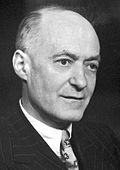 Cyril Norman HinshelwoodBoth received Faraday Lectureship Prize
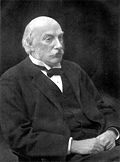 John William Strutt, 3rd Baron RayleighBoth received Faraday Lectureship Prize
 Theodore William RichardsBoth received Faraday Lectureship Prize
Fame.am measures public visibility signals. It does not measure human value, talent, morality, or credibility.