Ilya Prigogine
Russian-Belgian physical chemist (1917-2003) · Belgium · Scientists · Died at 86
Ilya Prigogine is read about 317 times a day, in 68 languages.
A typical day, 30 days to 21 October 2026
The middle day of the days counted, so one week of news cannot move it. The line under it is the last 396 days, one point a day.
Something wrong?A physical chemist who won the 1977 Nobel Prize for explaining how order can emerge from chaos - his theory of dissipative structures showed that complex systems don't just decay, they can organize themselves far from equilibrium.
A life in dates
Also in Deutsch
Photos 8


.jpg?width=1200)


.jpg?width=1200)

In their own words 10
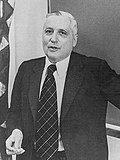 ,
, The denial of becoming by physics estranged science from philosophy...
Entropy is the price of structure
Whatever we call reality, it is revealed to us only through the active construction in which we participate.
Awards
About this person
Ilya Romanovich Prigogine was born in Russia on 25 January 1917 and became a Belgian physical chemist whose work cut against the grain of classical thermodynamics. Where the old models assumed systems slide toward disorder, Prigogine studied irreversibility and non-equilibrium states - places where energy flows through a system and spontaneous organization appears. His theory of dissipative structures mapped how complexity arises in everything from chemical reactions to living cells. The Francqui Prize came in 1955, the Rumford Medal in 1976, and the Nobel Prize in Chemistry in 1977 for contributions that redefined how we understand time, entropy, and self-organization. He died on 28 May 2003.




Fame.am measures public visibility signals. It does not measure human value, talent, morality, or credibility.