Hussein of Jordan
King of Jordan from 1952 to 1999 · Jordan · Historical Figures · Lived 1935 to 1999 · aged 63
Hussein of Jordan is read about 2,908 times a day, in 72 languages.
A typical day, 30 days to 15 October 2026
The middle day of the days counted, so one week of news cannot move it. The line under it is the last 390 days, one point a day.
Something wrong?He held the throne for 46 years, survived dozens of assassination attempts, and kept Jordan upright through wars, expulsions, and Cold War crossfire - long enough to become the Middle East's conciliator, the king who made peace with Israel while others still refused.
A life in dates
Also in Deutsch
Photos 12


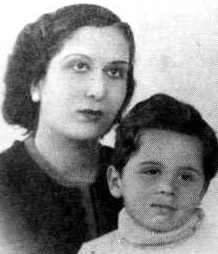 Hussein (age six) and his mother, Zein al-Sharaf, 1941
 Hussein (age eleven) seen behind his grandfather King Abdullah I after the independence of Jordan was declared, 25 May 1946.
 King Hussein in royal ceremonial dress, 1953
 Hussein addressing his troops in 1956, as Ali Abu Nuwar, the army chief of staff, who in 1957 was involved in an alleged coup attempt, observes.
 Hussein receiving a warm welcome from his troops, 1 March 1957
 Hussein with his cousin King Faisal II (left) of the Kingdom of Iraq, 1957. In February 1958, the two Hashemite Kingdoms formed the Arab Federation that lasted until Faisal was deposed in a bloody coup on 14 July 1958.
In their own words 1
 ,
Jordan itself is a beautiful country.
Awards
Family
Parents
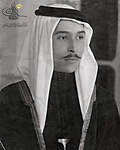
 Hussein of Jordan
Partners



Children
- Princess Alia bint Al-Hussein of Jordan
 Abdullah II of Jordan
 Prince Feisal bin Al-Hussein of Jordan
 Princess Aisha bint Al-Hussein of Jordan
- Princess Zein bint Al-Hussein of Jordan
 Princess Haya bint Al-Hussein of Jordan
 Prince Ali bin Al-Hussein of Jordan
 Princess Abir Muhaisen
 Hamzah bin Al-Hussein
 Prince Hashem bin Al-Hussein of Jordan
- Princess Iman bint Al-Hussein of Jordan
 Princess Raiyah bint Al-Hussein of Jordan
- Timothy Roman
Brothers and sisters


Is this everyone?
Only relatives with a profile here are drawn, so a family can be larger than this. A line here can also be wrong.
Correct this familyAbout this person
Hussein bin Talal was born in Amman in 1935, eldest son of the crown prince and a 40th-generation descendant of Muhammad. His grandfather Abdullah I was assassinated; his father Talal took the throne in 1951 but was forced to abdicate a year later due to illness. Hussein was enthroned at seventeen in 1953, inheriting a young country with the West Bank, few resources, and a flood of Palestinian refugees from 1948. He allowed Jordan's only democratically elected government in 1956, then forced it out within months, imposing martial law and banning parties. Jordan fought Israel three times under his watch - the 1967 Six-Day War cost him the West Bank. In 1970 he expelled Palestinian militants in Black September. He renounced claims to the West Bank in 1988 after the PLO was recognized as the Palestinians' sole representative, lifted martial law in 1989 amid riots, and in 1994 became the second Arab leader to sign a peace treaty with Israel. He spent his final decades as the region's peacemaker, pardoning dissidents and giving them posts, balancing nationalists and monarchists and superpowers. He died of cancer in 1999 at sixty-three, the longest-reigning leader the M
Fame.am measures public visibility signals. It does not measure human value, talent, morality, or credibility.