Hermann Staudinger
German chemist, winner of the 1953 Nobel Prize in Chemistry (1881-1965) · Germany · Scientists · Died at 84
Hermann Staudinger is read about 94 times a day, in 69 languages.
A typical day, 30 days to 16 September 2026
The middle day of the days counted, so one week of news cannot move it. The line under it is the last 361 days, one point a day.
Something wrong?He proved that giant molecules - polymers - actually exist, a claim the chemistry establishment spent years dismissing as nonsense until the Nobel committee finally admitted he'd been right all along.
A life in dates
Also in Deutsch
Photos 8
 Hermann Staudinger
 Chemiker- 1. Reihe- Frau Virtanen, Artturi I. Virtanen, Gerhard Domagk, Frédéric Joliot-Curie, Hermann Staudinger, Karl Georg v. Hevesy, Frau Domagk, - LABW - Staatsarchiv Freiburg W 134 Nr. 052411c
 Chemiker- Artturi I. Virtanen, Gerhard Domagk, Frédéric Joliot-Curie, Hermann Staudinger, Karl Georg v. Hevesy - LABW - Staatsarchiv Freiburg W 134 Nr. 052416
 Chemiker- Artturi I. Virtanen, Gerhard Domagk, Frédéric Joliot-Curie, Hermann Staudinger; 2. Reihe- ?, Frau Hahn?, Ehepaar Granberg - LABW - Staatsarchiv Freiburg W 134 Nr. 052410a
 Chemiker- Artturi I. Virtanen, Gerhard Domagk, Frédéric Joliot-Curie, Hermann Staudinger; Karl Georg v. Hevesy, Frau Domagk, Frau Staudinger, Otto Hah - LABW - Staatsarchiv Freiburg W 134 Nr. 052411a
 Chemiker- Frau Artturi I. Virtanen, Artturi I. Virtanen, Gerhard Domagk, Frédéric Joliot-Curie, Hermann Staudinger, Karl Georg v. Hevesy, Frau Domagk, - LABW - Staatsarchiv Freiburg W 134 Nr. 052411b
 Chemiker- W. Frisch, Gerhard Domagk, Frédérik Joliot-Curie, Hermann Staudinger, Karl Georg v. Hevesy, Frau Domagk, links dahinter Frau Müller Rüegsegg - LABW - Staatsarchiv Freiburg W 134 Nr. 052408b
 Chemiker; Maikäferrede- Artturi I. Virtanen (links angeschnitten), Richard L. M. Synge und Hermann Staudinger, dahinter Karl Georg v. Hevesy - LABW - Staatsarchiv Freiburg W 134 Nr. 052437a
Awards
Family
Parents
 Hermann Staudinger
Partners


Is this everyone?
Only relatives with a profile here are drawn, so a family can be larger than this. A line here can also be wrong.
Correct this familyAbout this person
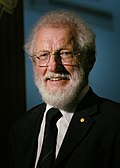
Hermann Staudinger was born on 23 March 1881 in Germany and trained as an organic chemist at a time when most scientists believed materials like rubber and cellulose were just clumps of small molecules held together by mysterious forces. He insisted they were true macromolecules - long chains of repeating units - and spent decades defending the idea against ridicule. Along the way he discovered ketenes and developed the Staudinger reaction, and in the 1920s worked with Leopold Ružička to map the molecular structures of pyrethrin I and II, work that would later enable synthetic pyrethroid insecticides. The Nobel Prize in Chemistry came in 1953, vindication for the man who'd forced chemistry to see big. He died on 8 September 1965.




Fame.am measures public visibility signals. It does not measure human value, talent, morality, or credibility.