Henri Becquerel
French physicist (1852-1908) · France · Scientists · Died at 55
Henri Becquerel is read about 527 times a day, in 106 languages.
A typical day, 30 days to 15 October 2026
The middle day of the days counted, so one week of news cannot move it. The line under it is the last 390 days, one point a day.
Something wrong?He left uranium salts on a photographic plate in a drawer and accidentally discovered that matter itself could emit invisible rays - the first glimpse of radioactivity, the force that would split the atom and rewrite physics.
A life in dates
Also in Deutsch
Photos 8


.jpg?width=1200)
Awards
Family

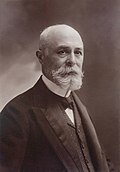 Henri Becquerel
Partners
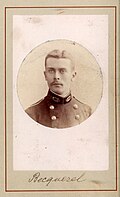
Is this everyone?
Only relatives with a profile here are drawn, so a family can be larger than this. A line here can also be wrong.
Correct this familyAbout this person
Antoine Henri Becquerel was born 15 December 1852 into a French family steeped in experimental physics. In 1896, working with uranium compounds, he found they fogged photographic plates even without exposure to light - radiation pouring out spontaneously from the elements themselves. The discovery earned him the 1903 Nobel Prize in Physics, shared with Marie and Pierre Curie, who would take the phenomenon further than he did. He died 25 August 1908, having opened a door he never fully walked through.
In common with Henri
 Irène Joliot-CurieBoth received Barnard Medal for Meritorious Service to Science
 Edwin HubbleBoth received Barnard Medal for Meritorious Service to Science
 Wilhelm RöntgenBoth received Barnard Medal for Meritorious Service to Science
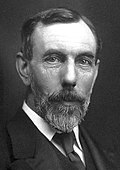 William RamsayBoth received Barnard Medal for Meritorious Service to Science
 Ernest RutherfordBoth received Barnard Medal for Meritorious Service to Science
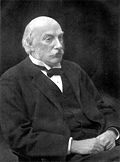 John William Strutt, 3rd Baron RayleighBoth received Barnard Medal for Meritorious Service to Science
Fame.am measures public visibility signals. It does not measure human value, talent, morality, or credibility.