Gustav Stresemann
German politician, statesman, and Nobel Peace Prize laureate (1878-1929) · Germany · Politicians · Died at 51
Gustav Stresemann is read about 1,745 times a day, in 75 languages.
A typical day, 30 days to 20 October 2026
The middle day of the days counted, so one week of news cannot move it. The line under it is the last 395 days, one point a day.
Something wrong?The man who convinced Weimar Germany to stop fighting the last war and start surviving the peace. As foreign minister through six fragile cabinets, Stresemann traded revanchism for pragmatism - pacts with France, a seat at Geneva, reparations halved - and won the Nobel for it in 1926.
A life in dates
Also in Deutsch
Photos 8
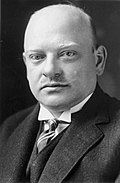
 Bundesarchiv Bild 146-1989-040-27, Gustav Stresemann
_Scialoja%2C_Vandervelde%2C_Luther%2C_Briand%2C_Streseman_-_btv1b531585980.jpg?width=1200) (8-3-26, réunion de la SDN à Genève, de g. à d.) Scialoja, Vandervelde, Luther, Briand, Streseman - btv1b531585980
(8-3-26, réunion de la SDN à Genève, de g. à d.) Scialoja, Vandervelde, Luther, Briand, Streseman - btv1b531585980_Luther%2C_Streseman_(d%C3%A9l%C3%A9gu%C3%A9s_allemands_%C3%A0_la_Soci%C3%A9t%C3%A9_des_Nations%2C_Gen%C3%A8ve%2C_13_mars_1926)_-_btv1b53159342t.jpg?width=1200) (De g. à d.) Luther, Streseman (délégués allemands à la Société des Nations, Genève, 13 mars 1926) - btv1b53159342t
(De g. à d.) Luther, Streseman (délégués allemands à la Société des Nations, Genève, 13 mars 1926) - btv1b53159342t_Mme_Aschmann%2C_M._Chamberlain%2C_Mme_Volmer%2C_Luther%2C_Mme_Chamberlain%2C_Streseman_-_btv1b53159350b.jpg?width=1200) (De g. à d.) Mme Aschmann, M. Chamberlain, Mme Volmer, Luther, Mme Chamberlain, Streseman - btv1b53159350b
(De g. à d.) Mme Aschmann, M. Chamberlain, Mme Volmer, Luther, Mme Chamberlain, Streseman - btv1b53159350b_Dekan_Andreas%2C_Stresemann%2C_Schurman%2C_Dibelius_(Sennecke)_-_btv1b53200696f.jpg?width=1200) (De gauche à droite) Dekan Andreas, Stresemann, Schurman, Dibelius (Sennecke) - btv1b53200696f
(De gauche à droite) Dekan Andreas, Stresemann, Schurman, Dibelius (Sennecke) - btv1b53200696f_Stresemann%2C_Schurman_(ambassadeur_U.S.)_(Sennecke)_-_btv1b532006950.jpg?width=1200) (De gauche à droite) Stresemann, Schurman (ambassadeur U.S.) (Sennecke) - btv1b532006950
(De gauche à droite) Stresemann, Schurman (ambassadeur U.S.) (Sennecke) - btv1b532006950_Streseman%2C_Chamberlain%2C_Briand%2C_von_Schubert_-_btv1b53167412k.jpg?width=1200) (Genève, 10 septembre 1926, Société des Nations, de g. à d.) Streseman, Chamberlain, Briand, von Schubert - btv1b53167412k
(Genève, 10 septembre 1926, Société des Nations, de g. à d.) Streseman, Chamberlain, Briand, von Schubert - btv1b53167412k_-_btv1b53167410p.jpg?width=1200) 10-9-26, Genève, la sortie de M. Streseman (et de Friedrich Gaus) - btv1b53167410p
10-9-26, Genève, la sortie de M. Streseman (et de Friedrich Gaus) - btv1b53167410pIn their own words 10
 ,
, There is much sentimentality in the Fourteen Points of Wilson's peace program.
The conquest of Riga is of the greatest importance not only from the military, but also form the political point of view....
The restoration of German vitality is not guaranteed by the status quo ante.
Awards
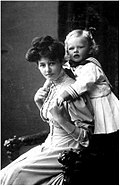
Family
Gustav StresemannPartners

Is this everyone?
Only relatives with a profile here are drawn, so a family can be larger than this. A line here can also be wrong.
Correct this familyAbout this person
Stresemann studied political economy at Berlin and Leipzig, then moved from trade associations into the Reichstag in 1907 as a National Liberal. During World War I he championed militarism and expansion; Germany's defeat and the monarchy's collapse hit him hard enough to force a rethink. He founded the German People's Party, swallowed his monarchist leanings, and accepted the republic. Named chancellor in August 1923, he ditched passive resistance in the Ruhr and launched the Rentenmark to kill hyperinflation, then lost a confidence vote three months later but stayed on as foreign minister under Wilhelm Marx. The Dawes Plan in 1924 cut reparations; Locarno in 1925 locked in the western borders and opened the door to the League of Nations; the Treaty of Berlin warmed things with Moscow. He negotiated the Young Plan as his health crumbled, then died of strokes in October 1929 at fifty-one.
Politicians from Germany 6



Fame.am measures public visibility signals. It does not measure human value, talent, morality, or credibility.