Glenn T. Seaborg
American chemist (1912-1999) · United States · Scientists · Died at 86
Glenn T. Seaborg is read about 303 times a day, in 75 languages.
A typical day, 30 days to 22 October 2026
The middle day of the days counted, so one week of news cannot move it. The line under it is the last 397 days, one point a day.
Something wrong?He co-discovered ten elements - including plutonium - and had one named for him while still alive. The chemist who reshaped the periodic table also helped isolate the fuel for the first atomic bomb, then spent decades advising presidents and pushing for nuclear arms control.
A life in dates
Also in Deutsch
Photos 8
 Glenn Seaborg - 1964
 14 April 1964 meeting of Atomic Energy Commission, Abe Silverstein (9465040385) (cropped)
 HD.4G.011 (10405626024)
 25th anniversary celebration commemorating the discovery of element-101. G. Choppin, Glenn Seaborg, B.G. Harvey, and Albert Ghiorso. Photograph taken March 28, 1980. BBC8807-07139. - DPLA - af8f363d95fee61acde8a270e0bc229c
 AEC (Atomic Energy Commission) visit. Left to right- Albert Ghiorso, Schlessinger, and Glenn Seaborg. Photograph taken September 22, 1972. XBB729-4967. (Photograph by- Steve Gerber) - DPLA - e58cfd7c1d318205396155013001e13f
 Atomic Energy Commission, Abe Silverstein (9465040385)
 Atomic Pioneers Awards Washington DC (7649993674)
 Bezoek Dr. Glenn T. Seaborg , voorzitter Amerikaanse commissie voor atoomenergie, Bestanddeelnr 920-7267
In their own words 1
 ,
There is a beauty in discovery. There is mathematics in music, a kinship of science and poetry in the description of nature, and exquisite form in a molecule.
Awards
Family
Glenn T. SeaborgPartners
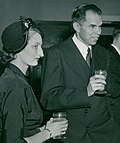
Is this everyone?
Only relatives with a profile here are drawn, so a family can be larger than this. A line here can also be wrong.
Correct this familyAbout this person
Glenn Theodore Seaborg was born April 19, 1912, and spent most of his career at the University of California, Berkeley, where he taught, researched, and served as chancellor from 1958 to 1961. Early on, he pioneered nuclear medicine and discovered isotopes like iodine-131, used to treat thyroid disease. During the Manhattan Project he developed the extraction process that isolated plutonium fuel for the implosion-type bomb, and his wider work synthesizing transuranium elements led to the actinide concept - a new way of arranging the periodic table. He shared the 1951 Nobel Prize in Chemistry with Edwin McMillan, then chaired the U.S. Atomic Energy Commission from 1961 to 1971, advocating for commercial nuclear energy while working toward arms control treaties. He advised ten presidents, co-authored "A Nation at Risk" in 1983, and before his death on February 25, 1999, saw element 106 named seaborgium in his honor - a gesture he called greater than the Nobel itself.
In common with Glenn
 Linus PaulingBoth received ACS Award in Pure Chemistry
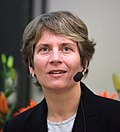 Carolyn BertozziBoth received ACS Award in Pure Chemistry
 Norman Foster Ramsey Jr.Both received Vannevar Bush Award
 Roald HoffmannBoth received George C. Pimentel Award in Chemical Education
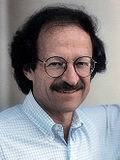 Harold E. VarmusBoth received Glenn T. Seaborg Medal
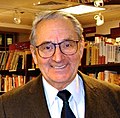 Elias James CoreyBoth received ACS Award in Pure Chemistry
Fame.am measures public visibility signals. It does not measure human value, talent, morality, or credibility.