George III of the United Kingdom
King of Great Britain and Ireland from 1760 to 1820 (1738-1820) · United Kingdom · Historical Figures · Died at 81
George III of the United Kingdom is read about 9,460 times a day, in 95 languages.
A typical day, 30 days to 15 October 2026
The middle day of the days counted, so one week of news cannot move it. The line under it is the last 390 days, one point a day.
Something wrong?The king who lost America but held the throne for nearly six decades. George III ruled through revolution, Napoleon, and the birth of the modern British state - then spent his final decade blind, deaf, and mad while his son ran the country.
A life in dates
Also in Deutsch
Photos 12


 George (right), his brother Edward, and their tutor, Francis Ayscough (later Dean of Bristol), by Richard Wilson, c. 1749
 Pastel of George as Prince of Wales by Jean-Étienne Liotard, 1754
 Wedding of George and Charlotte of Mecklenburg-Strelitz, oil sketch by Sir Joshua Reynolds, c. 1761
 Three of George's daughters, Mary (left), Sophia (right), and Amelia (baby), painted by John Singleton Copley, c. 1785
 Portrait by Allan Ramsay, 1762
 George travelling to the State Opening of Parliament in the Gold State Coach, 1762
In their own words 10
 ,
Upon pain of the highest displeasure, to assent to no law by which the importation of slaves should be in any respect prohibited or obstructed.
You can name me no Whig families that shall not have my Countenance; but where Tories come to me on Whig principles, let us take them.
Though I have subjects who will suffer immensely [i.e.
Awards
Family
Parents

 George III of the United Kingdom
Partners

Children
 George IV of the United Kingdom
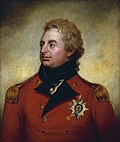 Prince Frederick, Duke of York and Albany
 William IV of the United Kingdom
 Charlotte, Princess Royal
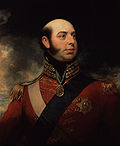 Prince Edward, Duke of Kent and Strathearn
 Princess Augusta Sophia of the United Kingdom
 Princess Elizabeth of the United Kingdom
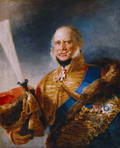 Ernest Augustus, King of Hanover
 Prince Augustus Frederick, Duke of Sussex
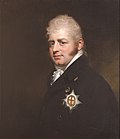 Prince Adolphus, Duke of Cambridge
 Princess Mary of the United Kingdom
 Princess Sophia of the United Kingdom
 Prince Octavius of Great Britain
 Prince Alfred of Great Britain
 Princess Amelia of the United Kingdom
 Princess Charlotte of Wales
Brothers and sisters


Is this everyone?
Only relatives with a profile here are drawn, so a family can be larger than this. A line here can also be wrong.
Correct this familyAbout this person
George III was born in 1738, the first Hanover monarch raised in Britain who spoke English as his first language. He became king in 1760 at twenty-two and married Princess Charlotte of Mecklenburg-Strelitz the next year; they had 15 children. His early reign brought triumph in the Seven Years' War, making Britain the dominant power in North America and India. Then came the disaster that defined him: the loss of thirteen American colonies in the War of Independence. He fought on through the Napoleonic Wars until Waterloo in 1815 and oversaw the 1807 ban on the transatlantic slave trade and the 1800 union of Great Britain and Ireland. In his later years, recurrent mental illness - possibly bipolar disorder or porphyria - took hold. By 1810 he suffered a final relapse and never recovered; his eldest son became Prince Regent in 1811. George died in 1820 at eighty-one, still the longest-lived and longest-reigning male monarch Britain has known.
Historical Figures from the United Kingdom 6



Fame.am measures public visibility signals. It does not measure human value, talent, morality, or credibility.