Frederick Sanger
British biochemist (1918-2013) · United Kingdom · Scientists · Died at 95
Frederick Sanger is read about 308 times a day, in 85 languages.
A typical day, 30 days to 21 October 2026
The middle day of the days counted, so one week of news cannot move it. The line under it is the last 396 days, one point a day.
Something wrong?He won the Nobel Prize in Chemistry twice - once for cracking the structure of insulin, once for inventing a method to read DNA itself. One of three people ever to take the same Nobel twice.
A life in dates
Also in Deutsch
Photos 8
 Frederick Sanger2
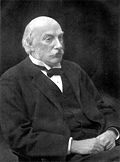
 Frederick Sanger
 History of Biology
 Nobelpreisträgertagung 1960 Mediziner- Ausschnitte aus der 1. Reihe- William P. Murphy, Frederick Sanger, Sir Hans A. Krebs, Max Born - LABW - Staatsarchiv Freiburg W 134 Nr. 062336
 Nobelpreisträgertagung 1960 Mediziner; Bayrisches Frühstück am Tisch- Werner Heisenberg, Frederick Sanger - LABW - Staatsarchiv Freiburg W 134 Nr. 062348
 Nobelpreisträgertagung 1960 Mediziner; Maikäferrede Frederick Sanger - W134Nr.062365 - Willy Pragher
 Nobelpreisträgertagung 1960 Mediziner; Nobelpreisträger im Gespräch Stadttheater 4.7.60 Frederick, Sir Hans A. Krebs, Paul Karrer - W134Nr.062378a - Willy Pragher
 Nobelpreisträgertagung 1960 Mediziner; Nobelpreisträger im Gespräch Stadttheater 4.7.60- Frederick Sanger, Adolf Butenandt - LABW - Staatsarchiv Freiburg W 134 Nr. 062375
Awards
In their orbit
About this person
Frederick Sanger was a British biochemist who spent his career unraveling the fine structure of biological molecules. In 1958 he won his first Nobel for determining the amino acid sequence of insulin, proving that proteins had unique, definite structures - a discovery that anchored the central dogma of molecular biology. He moved to the newly built Laboratory of Molecular Biology in Cambridge, where he developed the first practical technique for sequencing DNA. That method, refined over years, opened vast experimental territory and remains widely used. It brought him a second Chemistry Nobel in 1980, shared with Walter Gilbert and Paul Berg. He died in 2013, one of only five people to hold two Nobel Prizes.
In common with Frederick


Scientists from the United Kingdom 3


Fame.am measures public visibility signals. It does not measure human value, talent, morality, or credibility.