
Eugene Kaspersky
✓ Source-basedfallingRussian specialist in the information security field
He built one of the world's largest cybersecurity firms after a virus hit his own machine in 1989 and he wrote the fix himself. A former Soviet cryptologist turned CEO, he's spent years pointing out state-sponsored hacking - and arguing the world needs a treaty to stop it.
Also inDeutsch
Photos 1

In their own words 2
We as a security company are not able to develop true endpoint security for iOS. That will mean disaster for Apple.
Eugene Kaspersky frustrated by Apple’s iOS AV ban in The Register (22 May 2012)
I think [Apple is] ten years behind Microsoft in terms of security.
Kaspersky: Apple '10 years behind Microsoft in terms of security' in ZDNet (25 April 2012)
On YouTube
478 subscribersAwards 2
In their orbit 2

Connected to Eugene 3

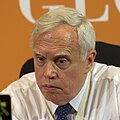
Developers born in the 1960s 3


About this person
Kaspersky graduated from the KGB Higher School's cryptology program in 1987 with a degree in mathematical engineering, then served as an officer and cryptologist in the Soviet army until 1991. His pivot came in 1989 when the Cascade virus infected his work computer and he built a program to remove it. He co-founded Kaspersky Lab in 1997 and led its research arm, using security work and direct salesmanship to grow the company to 4,000 employees. He took the CEO role in 2007 and has held it since, identifying government cyberwarfare operations along the way and pushing for an international ban on digital conflict.
Fame.am measures public visibility signals. It does not measure human value, talent, morality, or credibility.