Eugène Ionesco is read about 780 times a day, in 78 languages.
A typical day, 30 days to 15 October 2026
The middle day of the days counted, so one week of news cannot move it. The line under it is the last 390 days, one point a day.
Something wrong?He built a theatre where language collapses, logic fails, and people speak past each other into the void. The Bald Soprano kicked off the whole absurdist movement - anti-play as manifesto.
A life in dates
Also in Deutsch
Photos 8
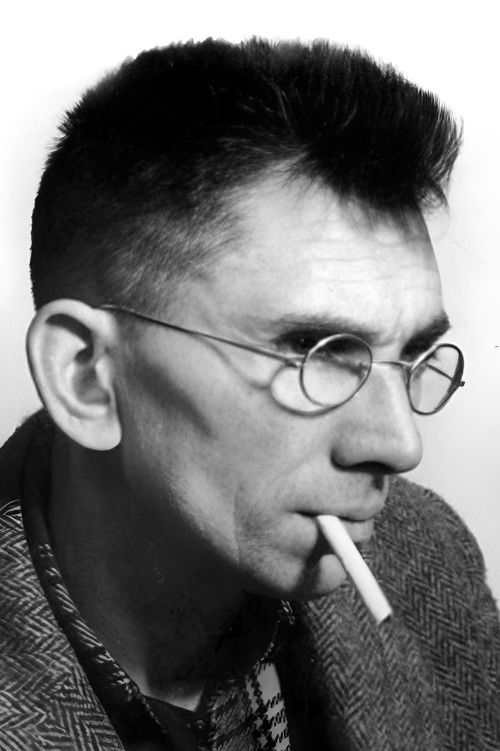
 Eugene Ionesco 04
 EIonesco 1957
 Eugen Ionescu about Andrei Tudor Facla 1935
 Eugen Ionescu visit to Israel (997009326826705171)
 Eugen Ionescu visit to Israel (997009326826905171)
 Eugen Ionescu visit to Israel (997009326827005171)
 Eugen Ionescu visit to Israel (997009326827105171)
 Eugen Ionescu visit to Israel (997009326827305171)
In their own words 10
 ,
I am told, in a dream ... you can only get the answer to all your questions through a dream.
I have no ideas before I write a play. I have them when I have finished it ... I believe that aritistic creation is spontaneous. It is for me.
It was a lot of fuss about nothing, wasn’t it?
Awards
Family
Eugène IonescoPartners
Is this everyone?
Only relatives with a profile here are drawn, so a family can be larger than this. A line here can also be wrong.
Correct this familyAbout this person
Born Eugen Ionescu in Romania on 26 November 1909, he moved to France and switched languages, writing almost entirely in French. The Bald Soprano arrived as a revolution: techniques and ideas that broke drama open and seeded what became the Theatre of the Absurd. He kept writing plays that leaned into absurdism and surrealism, following the thread Albert Camus had pulled. The Académie française admitted him in 1970; that same year he took the Austrian State Prize for European Literature, then the Jerusalem Prize in 1973. He died 28 March 1994.
In common with Eugène


Fame.am measures public visibility signals. It does not measure human value, talent, morality, or credibility.