Erwin Panofsky is read about 226 times a day, in 43 languages.
A typical day, 30 days to 16 September 2026
The middle day of the days counted, so one week of news cannot move it. The line under it is the last 60 days, one point a day.
Something wrong?He taught the world to read paintings the way you'd read philosophy - layers of meaning coded in gesture, symbol, arrangement. His method turned art history into a discipline that could think.
Also in Deutsch
Photos 7
_(cropped).jpg?width=1200) Erwin Panofsky at Oberlin College (1950) (cropped)
Erwin Panofsky at Oberlin College (1950) (cropped).jpg?width=1200) Ehem. Kunsthistorisches Seminar, Tafel (1)
Ehem. Kunsthistorisches Seminar, Tafel (1).jpg?width=1200) Ehem. Kunsthistorisches Seminar, Tafel (2)
Ehem. Kunsthistorisches Seminar, Tafel (2).Tafel_Panofsky.ajb.jpg?width=1200) Hamburger Kunsthalle (Hamburg-Altstadt).Tafel Panofsky.ajb
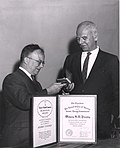
Hamburger Kunsthalle (Hamburg-Altstadt).Tafel Panofsky.ajb.jpg?width=1200) Honorary degree recipients at Oberlin College (1950)
Honorary degree recipients at Oberlin College (1950) Kunsthalle HH plaque Erwin Panofsky
 Professor Dr. Erwin Panofsky, Tafel vor dem Haus Alsterchaussee 11 in Hamburg
Awards
Family
 Erwin Panofsky
Partners
Children
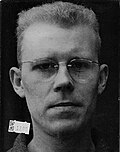
Is this everyone?
Only relatives with a profile here are drawn, so a family can be larger than this. A line here can also be wrong.
Correct this familyAbout this person
Born in Germany in 1892, Panofsky made his name decoding the intellectual scaffolding beneath Renaissance art, arguing that images and ideas moved in tandem, each interpreting the other. The Nazi rise sent him to the United States, where he continued the work that would define modern iconography. His studies on Albrecht Dürer, early Netherlandish painting, and humanist themes in Renaissance art became foundational texts, still assigned decades later. He died in 1968, having transformed how scholars approach the visual artifact - not as decoration, but as argument.



Fame.am measures public visibility signals. It does not measure human value, talent, morality, or credibility.