Elagabalus
Roman Emperor (218-222) · Italy · Politicians · Lived 203 to 222 · aged 18
Elagabalus is read about 2,290 times a day, in 80 languages.
A typical day, 30 days to 15 October 2026
The middle day of the days counted, so one week of news cannot move it. The line under it is the last 390 days, one point a day.
Something wrong?He ruled Rome for four years as a teenager, dragged a sacred black stone across the empire to install his Syrian sun god above Jupiter, married a Vestal Virgin, and died in a palace assassination at 18. The surviving accounts - written by senators who despised him - made his name shorthand for imperial excess.
Also in Deutsch
Photos 8
.jpg?width=1200) Bust of Elagabalus - Palazzo Nuovo - Musei Capitolini - Rome 2016 (2)
Bust of Elagabalus - Palazzo Nuovo - Musei Capitolini - Rome 2016 (2) Joos van Winghe - Heliogabal and the Wise Women
.png?width=1200) 24 - Elagabalus (Mutinensis - color)
24 - Elagabalus (Mutinensis - color) De onkuisheid van Heliogabalus
 Elagabale sur un char traîné par des femmes
 Elagabalus Forchtenstein
_(14784546505).jpg?width=1200) General biography; or, Lives, critical and historical, of the most eminent persons of all ages, countries, conditions, and professions, arranged according to alphabetical order (1818) (14784546505)
General biography; or, Lives, critical and historical, of the most eminent persons of all ages, countries, conditions, and professions, arranged according to alphabetical order (1818) (14784546505).jpg?width=1200) Imperatorum Romanorum 1559 (122430811)
Imperatorum Romanorum 1559 (122430811)In their own words 4
 ,
, He undertook to disparage my age when he himself had appointed his ten-year-old son.
I am emperor. It is I who know what is best for Rome. Not you traitors. Now, let go of my horses!
[He was] delighted to be called the mistress, the wife, the Queen of Hierocles.
Family
Parents

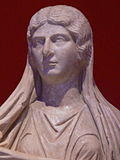 Elagabalus
Partners


Is this everyone?
Only relatives with a profile here are drawn, so a family can be larger than this. A line here can also be wrong.
Correct this familyAbout this person
Born Sextus Varius Avitus Bassianus around 204 in Emesa, Syria, he served as head priest of the sun god Elagabal before his grandmother Julia Maesa engineered an army revolt that made him emperor at 14 in 218, overthrowing Macrinus after the death of his cousin Caracalla. He brought the cult's large baetyl stone to Rome and forced the Senate to participate in its rites, disregarding Roman religious tradition. Contemporary senator Cassius Dio and later sources accused him of marrying four women including a Vestal Virgin, lavishing favours on male courtiers suggested as lovers, and prostituting himself - accounts modern scholars see as likely shaped by political motives and Roman stereotypes about Eastern effeminacy. The Praetorian Guard, Senate, and common people turned against him. In March 222, still only 18, he was killed in an assassination plot his grandmother devised and the Guard carried out, replaced by his cousin Severus Alexander.
Politicians from Italy 6


Fame.am measures public visibility signals. It does not measure human value, talent, morality, or credibility.