Edward Elgar
English composer (1857-1934) · United Kingdom · Musicians · Died at 76
Edward Elgar is read about 1,015 times a day, in 66 languages.
A typical day, 30 days to 21 October 2026
The middle day of the days counted, so one week of news cannot move it. The line under it is the last 396 days, one point a day.
Something wrong?He wrote the tune that plays at every British graduation, and the choral work that seized the Edwardian concert hall - but spent decades as a self-taught outsider in a world that prized pedigree, battling class suspicion and religious unease before the Enigma Variations made him impossible to ignore.
A life in dates
Also in Deutsch
Photos 8


In their own words 5
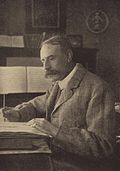 ,
I always said God was against art and I still believe it.
To my friends pictured within.
My idea is that there is music in the air, music all around us, the world is full of it and you simply take as much as you require.
Listen
SpotifyAlbums 24
 EQElgar: String Quartet / Bridge: Three Idylls / Walton: String Quartet
Awards
In their orbit
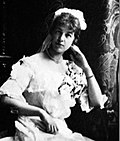 Spouse: Caroline Alice Elgar
About this person
Edward Elgar was born in 1857, a Roman Catholic shopkeeper's son in Protestant Britain, teaching himself composition while the academy looked elsewhere. He married above his station - the daughter of a senior Army officer - and she pushed him forward, but success didn't arrive until he was past forty. The Enigma Variations in 1899 broke through at home and abroad, followed a year later by The Dream of Gerontius, a Catholic text that unsettled Anglican England but lodged itself in the repertory for good. In his fifties he delivered a symphony and violin concerto to immense acclaim; the second symphony and cello concerto took decades to find their place. By his later years the music seemed to speak mainly to British ears, and after his death in 1934 his stock sank for a generation. The revival came in the 1960s, powered by new recordings - he'd been the first major composer to take the gramophone seriously, conducting his own works in sessions from 1914 to 1925 and rerecording them when better microphones arrived.
In common with Edward
 Yehudi MenuhinBoth received Walter Willson Cobbett Medal
 Benjamin BrittenBoth received Royal Philharmonic Society Gold Medal
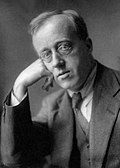 Gustav HolstBoth received Royal Philharmonic Society Gold Medal
 Ralph Vaughan WilliamsBoth received Walter Willson Cobbett Medal
 Mstislav RostropovichBoth received Royal Philharmonic Society Gold Medal
 Anton RubinsteinBoth received Royal Philharmonic Society Gold Medal
Fame.am measures public visibility signals. It does not measure human value, talent, morality, or credibility.